Door Won't Latch? How to Fix Strike Plate Misalignment
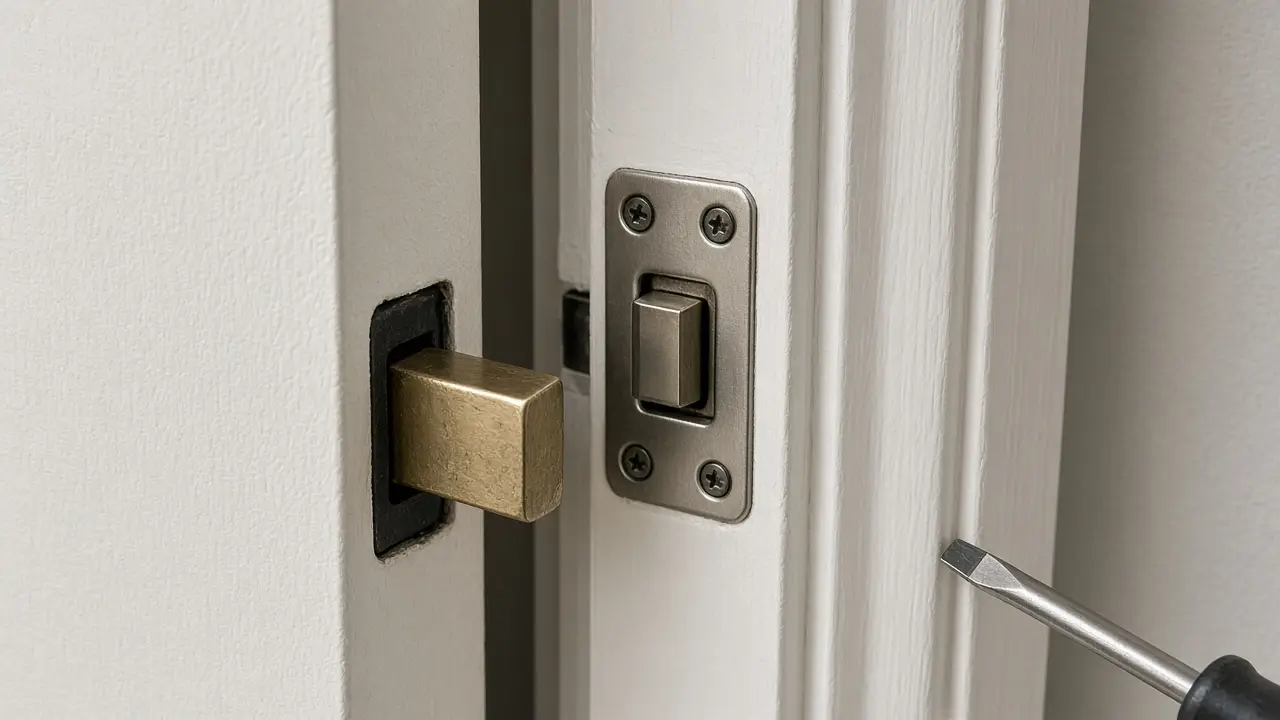
A door that won't latch is annoying and can be a privacy or security issue. In most cases the latch bolt (the angled piece that sticks out of the door) is just slightly misaligned with the strike plate opening on the frame. The fix is usually simple and requires only basic tools.
Tools and materials
- Phillips and flat-head screwdrivers
- Lipstick, chalk, or a dry-erase marker
- Longer wood screws (2.5 to 3 inches)
- Metal file
- Wood chisel and hammer (for moving the strike plate)
- Wood filler or toothpicks and wood glue
- Drill (optional)
Step 1: Diagnose the problem
Close the door slowly and watch the latch bolt as it meets the strike plate.
- Latch hits above or below the opening: The door or strike plate has shifted vertically. Common causes include loose hinges or house settling.
- Latch doesn't reach the strike plate: The gap between the door and frame is too large.
- Latch reaches but doesn't catch: The latch may be sticking, or the strike opening may be too small.
Mark test: Rub lipstick, chalk or a marker on the latch bolt. Close the door gently against the strike plate. The mark shows exactly where the latch hits.
Step 2: Tighten the hinges
Loose hinge screws often let the door sag, especially at the top hinge.
- Open the door and tighten all screws on the hinges, on both the door and the frame.
- If a screw spins without tightening, the hole is stripped. Fix it by:
- Replacing it with a longer screw (2.5 to 3 inches) that reaches the wall framing behind the jamb, especially on the top hinge. Don't overtighten.
- Or filling the hole with wooden toothpicks dipped in wood glue, breaking them off flush, letting the glue dry, then reinstalling the original screw.
Close the door and test. Tightening the top hinge with a long screw often pulls the door back up into alignment.
Step 3: Adjust the strike plate (small misalignment)
If the latch misses the opening by about 1/8 inch or less:
- Remove the strike plate screws and the plate.
- Clamp the plate in a vise or hold it firmly, and file the inside edge of the opening where the latch hits.
- Reinstall the plate and test.
Alternatively, if the wood mortise behind the opening is too shallow, deepen it slightly with a chisel so the latch can extend fully.
Step 4: Move the strike plate (larger misalignment)
If the latch misses by more than about 1/8 inch:
- Mark where the strike plate needs to go using the lipstick mark.
- Remove the strike plate.
- Extend the mortise (the recess for the plate and latch) with a chisel to the new position.
- Fill old screw holes with wood filler or glued toothpicks.
- Drill pilot holes and attach the strike plate in the new position.
- Fill and paint any exposed gaps.
Step 5: Fix a latch that doesn't reach
If the door closes but there's a gap between the latch and strike:
- Weatherstripping or a thick doorstop may be preventing the door from closing fully. Adjust or trim it.
- Shim the strike plate: Place a thin piece of cardboard or wood shim behind the strike plate to bring it closer to the door.
- Bent hinges: Inspect for bent hinge leaves.
Step 6: Check the latch itself
If the latch sticks or doesn't spring back:
- Remove the doorknob and latch per the manufacturer's instructions (usually two screws on the interior side).
- Spray the latch with a dry lubricant like graphite or silicone, and work it a few times.
- If it's broken, replace it. Latch assemblies are inexpensive and standardized; measure the backset (distance from the door edge to the center of the knob hole), typically 2-3/8 or 2-3/4 inches.
Step 7: Fix a rattling door
If the door latches but rattles, many strike plates have a small metal tab inside the opening. Bend it slightly toward the doorstop with a flat-head screwdriver. This makes the door close more snugly.
Seasonal changes
Wood doors and frames expand in humid weather and shrink in dry weather. A door that sticks in summer may latch fine in winter. If your problem comes and goes with the seasons, make small adjustments and consider sealing all edges of a wood door with paint or finish to reduce moisture absorption.
Safety notes
- Wear safety glasses when filing or chiseling.
- Keep chisels sharp and cut away from your body.
- Don't remove a heavy door alone.
When to call a pro
If the door frame is visibly out of square, cracks appear in the wall above the door, or several doors stop latching at once, there could be structural movement. Have a contractor inspect it.
In most cases, a stuck latch is just a few screws and a file away from working again.
Related guides
Sources and further reading
- Your hinge, lockset or strike plate manufacturer's installation sheet
- U.S. Fire Administration: Home fire safety (keep fire-rated doors, such as garage-to-house doors, self-closing and latching if your home has them)
Sources checked October 23, 2026. If something here does not match your product's manual, follow the manual and let us know.
Frequently asked questions
Why did my door suddenly stop latching?
Seasonal humidity can make wood swell or shrink, and hinges can loosen over time, both of which shift the door slightly so the latch misses the strike plate opening.
How do I find where the latch is hitting?
Rub lipstick, chalk or a dry-erase marker on the latch bolt, close the door, and look at the mark it leaves on the strike plate.
Can I just file the strike plate?
For small misalignments of about 1/8 inch, enlarging the strike plate opening with a metal file is a common fix. For larger gaps, move the strike plate.
What if the door latches but rattles?
The latch is engaging but there's too much play. Many strike plates have a small tab that can be bent slightly toward the doorstop to hold the door more snugly.