How to Fix a Squeaky Door Hinge (Without Making a Mess)
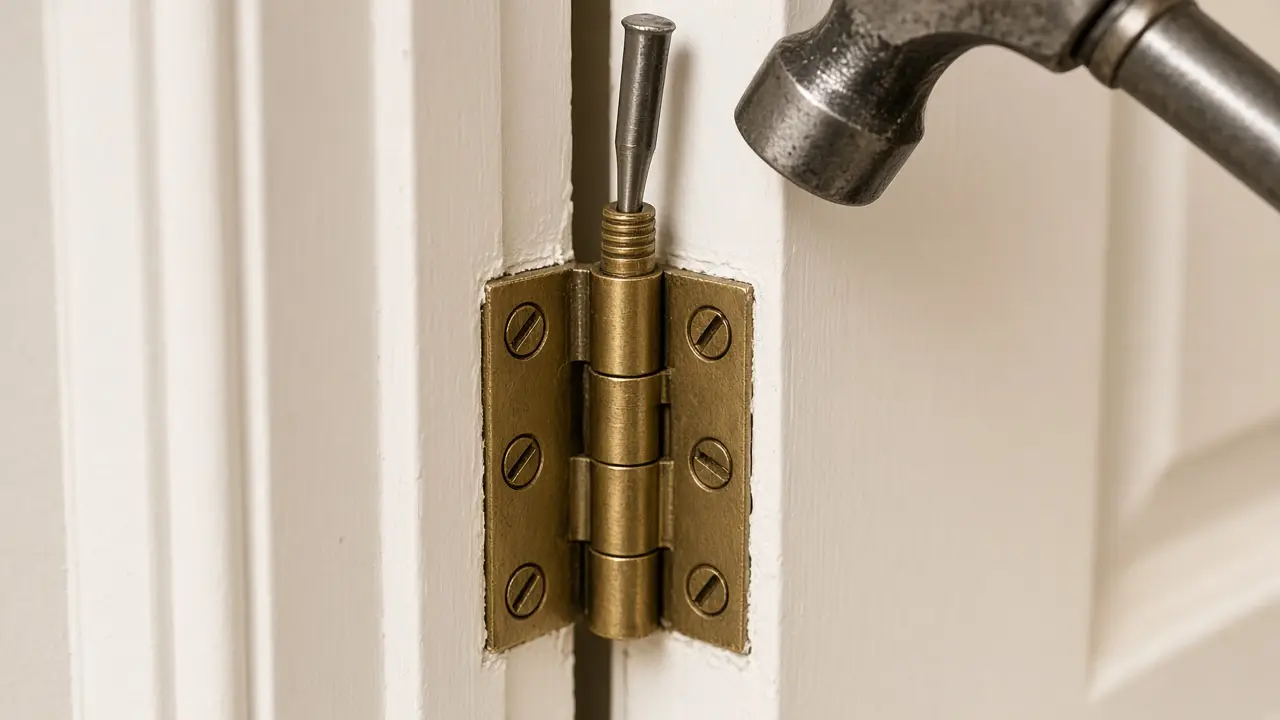
A squeaky door hinge is a small annoyance, but it's also one of the quickest fixes in the house. The squeak comes from metal rubbing on metal inside the hinge barrel, usually where the hinge pin sits. Dirt, rust and dried-out lubricant make it worse. Spraying lubricant on the outside of the hinge often helps only briefly and can drip down the door. The cleaner and longer-lasting fix is to remove the pin, clean it, and lubricate it properly.
Tools and materials
- Hammer
- Nail set, a large nail, or a flat-head screwdriver
- Rags or paper towels
- Fine steel wool or a scouring pad (for rusty pins)
- Lubricant: white lithium grease, silicone spray, a dedicated hinge lubricant, or petroleum jelly in a pinch
- Drop cloth or newspaper
Step 1: Find the squeaky hinge
Open and close the door slowly while listening near each hinge. Most doors have two or three hinges, and often only one squeaks. Fix that one first, but doing all of them while you have the tools out isn't a bad idea.
Step 2: Close the door
Close the door fully. This keeps the door's weight supported by the latch and the other hinges, so it won't sag or fall when you remove a pin. Work on one hinge at a time and never remove all pins at once unless you intend to take the door off.
Step 3: Remove the hinge pin
- Place the tip of a nail set or a nail against the bottom of the pin, at the hole in the bottom of the hinge barrel.
- Tap upward with a hammer until the pin rises enough to grip.
- Pull the pin out by hand, or wiggle it free with pliers.
If the hinge has no hole at the bottom, place a flat-head screwdriver under the pin's head (the cap at the top) and tap the screwdriver handle upward gently.
Tip: Put a drop cloth on the floor to catch grime.
Step 4: Clean the pin
Wipe the pin with a rag to remove old grease and dirt. If it's rusty, rub it with fine steel wool until it's smooth. Also wipe the inside of the hinge barrel with a rag wrapped around a thin screwdriver, or use a pipe cleaner.
Step 5: Lubricate
Apply a thin, even coat of lubricant along the length of the pin:
- White lithium grease: thick, long-lasting, good for heavy doors.
- Silicone spray: clean, doesn't attract much dust.
- Dedicated hinge lubricant: products formulated to stay put.
- Petroleum jelly: a common household option that works for light use.
Avoid using too much. Excess lubricant can drip and stain the door or trim.
Step 6: Reinstall the pin
Align the hinge knuckles, then slide the pin back in from the top. Tap it down gently with the hammer until the head sits flush. Open and close the door several times to spread the lubricant inside the barrel. Wipe away any squeeze-out.
Step 7: Repeat if needed
Move to the next hinge. Test the door after each one.
Quick fix if you can't remove the pin
If the pin is painted over or stuck:
- Score the paint around the top of the pin with a utility knife.
- Spray a penetrating oil at the top of the hinge barrel and let it soak for 15 minutes. Protect the door with a rag.
- Try tapping the pin out again.
If it still won't budge, lubricate from the top with a straw nozzle and work the door back and forth, then wipe up thoroughly.
When the squeak keeps coming back
- Worn hinge: If the pin wobbles in the barrel or the knuckles are visibly worn, the hinge is due for replacement. New hinges are inexpensive. Match the size (commonly 3.5 inches for interior doors in the US) and corner shape (square or rounded).
- Loose screws: A sagging door can bind at the hinges. Tighten hinge screws. If a screw spins without tightening, the hole is stripped. A common fix is to replace one screw in the top hinge with a longer screw (for example, 2.5 to 3 inches) that reaches the wall framing behind the jamb. Be careful not to overtighten and pull the jamb out of alignment.
- Door rubbing the frame: That's not a hinge squeak. Look for rub marks along the edge of the door or frame.
Safety notes
- Keep fingers clear of the hinge gap when the door moves.
- Wear safety glasses when tapping pins.
- For heavy exterior doors, work one hinge at a time and have a helper support the door if you're unsure.
Quick recap
A squeaky hinge usually just needs a clean, lightly greased pin. Pull it, clean it, lubricate it, put it back, and the door should swing quietly.
Related guides
Sources and further reading
- Your hinge, lockset or strike plate manufacturer's installation sheet
- U.S. Fire Administration: Home fire safety (keep fire-rated doors, such as garage-to-house doors, self-closing and latching if your home has them)
Sources checked October 23, 2026. If something here does not match your product's manual, follow the manual and let us know.
Frequently asked questions
Is WD-40 good for squeaky hinges?
The standard WD-40 product can quiet a squeak but is a light, penetrating spray that can evaporate and attract dust. Many people get longer-lasting results from white lithium grease, silicone lubricant or a dedicated hinge lubricant.
Can I use olive oil or cooking oil on a hinge?
It may work briefly, but food oils can turn sticky or rancid over time and attract dirt. A product made for lubricating metal is a better choice.
Do I need to take the door off to fix a squeak?
No. Remove one hinge pin at a time with the door closed; the other hinges hold the door in place.
Why does my hinge squeak again after a few weeks?
The hinge may be dirty, rusty or worn, or the lubricant may have evaporated. Clean the pin thoroughly and use a grease that stays put. Badly worn hinges should be replaced.