How to Change a Furnace Filter: Size, MERV Rating and Direction
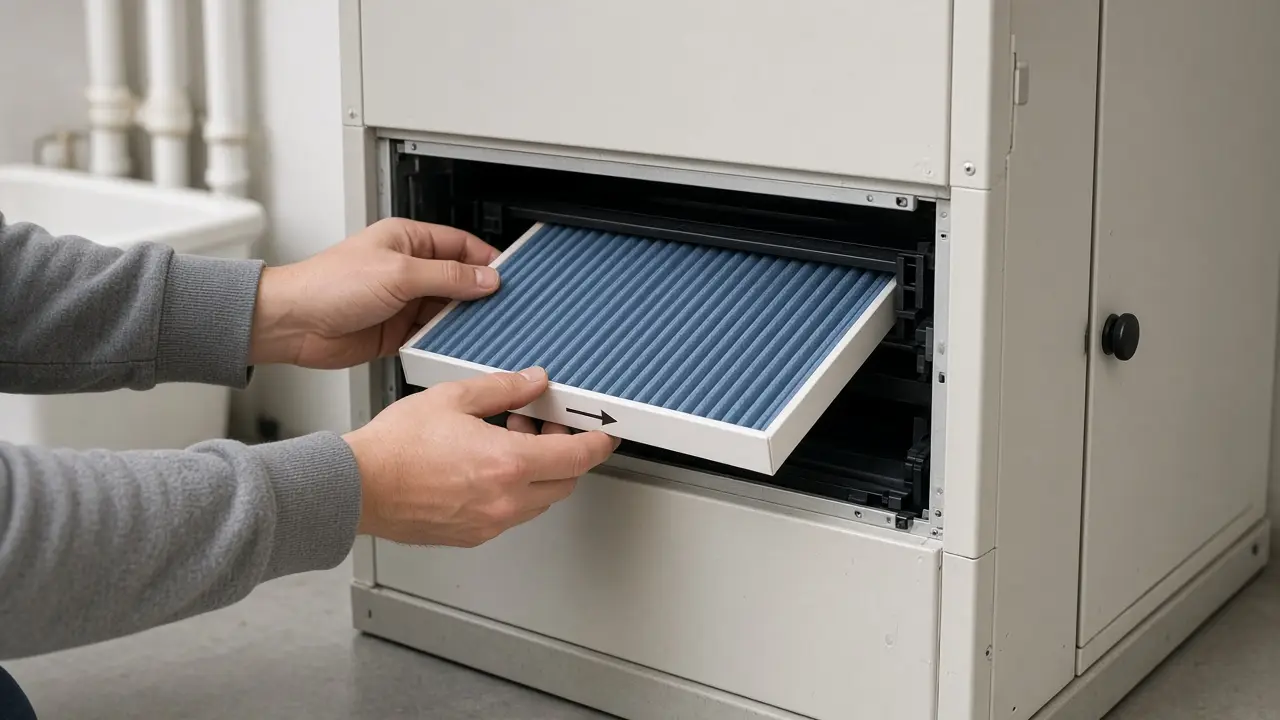
Replacing your furnace or HVAC filter is one of the simplest and most important home maintenance tasks. A dirty filter restricts airflow, which can make your system work harder, reduce comfort and lead to problems. This guide shows you where to find the filter, how to choose a replacement and how to install it correctly.
Tools and materials
- Replacement filter in the correct size
- Flashlight
- Marker
- Vacuum (optional, for dust around the slot)
- Screwdriver (only if your filter access cover is screwed shut)
Step 1: Turn off the system
Set your thermostat to OFF before changing the filter, so the blower doesn't pull dust into the system while the filter is out. For extra safety, some homeowners also switch off the furnace's power switch (often a light-style switch on or near the unit).
Step 2: Find the filter
Filter location varies by system:
- In the furnace or air handler: A slot between the return duct and the blower cabinet, often behind a removable cover or door near the bottom or side of the unit.
- In the return duct: A slot in the ductwork just before the furnace.
- Behind a return air grille: A large grille in a wall, ceiling or hallway. Some homes have filters at several return grilles.
If you can't find it, check the owner's manual for your furnace or air handler.
Step 3: Read the size on the old filter
Slide the old filter out and look at the frame. The size is printed on the edge, such as 16x25x1 or 20x20x4. These are nominal sizes in inches (width x height x depth). The actual dimensions are often slightly smaller, which is normal.
Note the airflow arrow direction before removing it.
Step 4: Choose the right filter
MERV rating
MERV (Minimum Efficiency Reporting Value) indicates how well a filter captures particles, on a scale typically from 1 to 16 for residential filters. Higher MERV filters capture smaller particles.
- The EPA says filters rated MERV 13 or higher can capture smaller airborne particles more effectively, which can help indoor air quality.
- But high-efficiency filters can increase airflow resistance. Some older or smaller systems may not be designed for them. Check your HVAC manufacturer's recommendations or ask a technician before upgrading.
Thickness
Use the depth your slot is designed for. A 1-inch filter in a 4-inch slot lets air bypass the filter. Thicker filters (4 to 5 inches) typically last longer between changes.
Brand ratings
Some retailers use their own rating systems (such as MPR or FPR). Compare using MERV when possible.
Step 5: Install the new filter
- Find the airflow arrow on the frame.
- Point the arrow toward the furnace or air handler, in the direction air flows. For a filter at a return grille, the arrow points into the duct, away from the room.
- Slide the filter in fully. It should fit snugly without bending.
- Replace the cover or close the grille.
Tip: Write the date on the filter frame with a marker. It helps you track when it was changed.
Step 6: Turn the system back on
Restore the furnace switch and set the thermostat back to your preferred mode.
How often to change the filter
There's no single answer. Factors include filter type, household size, pets, allergies, dust and how much the system runs. Common guidance:
- 1-inch pleated filters: often every 1 to 3 months
- 4 to 5-inch media filters: often every 6 to 12 months
- Homes with pets or allergies: more often
Check the filter monthly during peak heating and cooling. If it looks gray and clogged, replace it, regardless of the calendar. Always follow the manufacturer's guidance printed on the filter packaging.
Signs your filter needs changing
- Visible dust buildup on the filter
- Reduced airflow from vents
- Dustier home than usual
- The system running longer than usual
Common mistakes
- Wrong direction: Always point the arrow toward the furnace.
- Wrong size: Gaps let unfiltered air bypass the filter.
- Forgetting multiple filters: Some homes have more than one return grille with filters.
- Running without a filter: Running the system without a filter lets dust reach the blower and coils.
Safety notes
- Turn off the system before opening the cabinet.
- Don't reach into the blower compartment. Moving parts and electrical components are inside.
- If you see signs of soot, corrosion, water leaks or burning smells, call an HVAC technician.
When to call a pro
The filter is a homeowner task, but the Department of Energy recommends periodic professional maintenance for heating and cooling systems. A technician can inspect components you shouldn't open yourself.
Changing a furnace filter takes about five minutes. Set a reminder, keep a spare on hand. A clean filter helps your system run as designed.
Related guides
- Fall Home Maintenance Checklist: 15 Tasks Before Winter
- How to Clean a Dryer Vent Safely (and Why It Matters)
Sources and further reading
- EPA: What is a MERV rating?
- EPA: Air cleaners and air filters in the home
- DOE FEMP: Home energy checklist
Sources checked October 23, 2026. If something here does not match your product's manual, follow the manual and let us know.
Frequently asked questions
How often should I change my furnace filter?
Follow your filter and HVAC manufacturer's guidance. Many 1-inch filters are rated for about 1 to 3 months. Homes with pets, allergies or heavy use may need more frequent changes. Check monthly during heating and cooling seasons.
What MERV rating should I use?
The EPA notes that MERV 13 or higher filters capture more small particles, but not every system can handle the added airflow resistance. Check your HVAC manufacturer's recommendation or ask a technician.
What happens if I install the filter backwards?
The filter may not perform as designed and could restrict airflow more. Install it with the arrow pointing toward the furnace (in the direction of airflow).
Are washable furnace filters worth it?
Some systems use permanent washable filters. They must be cleaned and fully dried as directed. Disposable pleated filters are more common in homes.