Fall Home Maintenance Checklist: 15 Tasks Before Winter
Fall is the best time of year to prepare your home for winter. Temperatures are comfortable for outdoor work, and fixing small problems now prevents frozen pipes, ice dams and heating breakdowns when it's cold. Use this checklist as a weekend plan. Not every item applies to every home or climate; skip what doesn't fit.
Outside the house
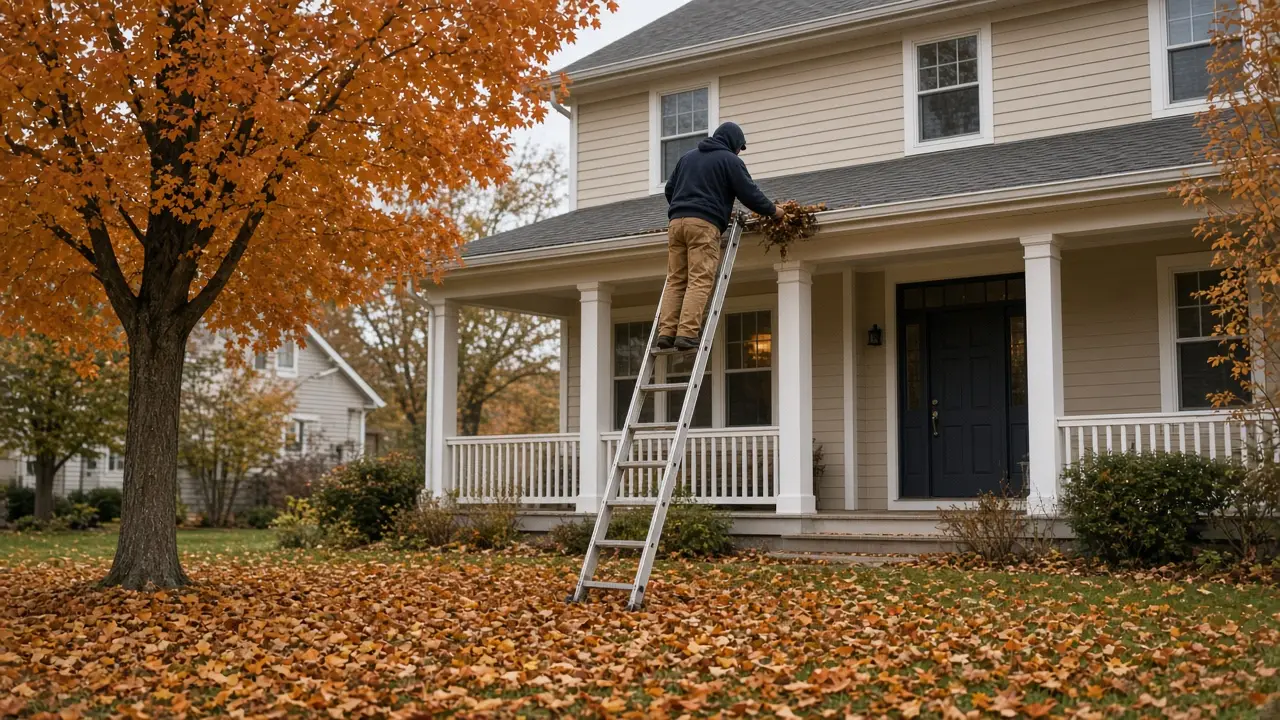
1. Clean the gutters and downspouts
Leaves and debris clog gutters, so rainwater overflows near your foundation. In cold climates, clogged gutters can contribute to ice dams.
- Scoop out debris by hand (with gloves) or with a gutter scoop.
- Flush with a garden hose to confirm water flows freely through the downspouts.
- Make sure downspouts discharge several feet away from the foundation. Add extensions if needed.
Ladder safety: Set the ladder on firm, level ground, maintain three points of contact, don't overreach, and have someone hold the base. Ladder falls are a common cause of home injuries, so take this step seriously. If you have a two-story home or a steep roof, consider hiring a gutter service.
2. Shut off and drain outdoor faucets
Water left in outdoor faucets and pipes can freeze, expand and burst pipes.
- Disconnect, drain and store garden hoses.
- If there's an indoor shutoff valve for the outdoor faucet, close it, then open the outdoor faucet to drain the line. Leave it open over winter if your plumber or faucet maker advises it.
- Frost-free faucets still need hoses removed; a hose left attached traps water.
- Have your irrigation (sprinkler) system winterized according to its manufacturer or by a pro.
3. Inspect the roof from the ground
Use binoculars to look for missing, cracked or curling shingles, and damaged flashing around chimneys and vents. Don't climb the roof unless you have the experience and equipment. Call a roofer for repairs.
4. Seal gaps around the exterior
Check where pipes, wires and vents enter the house. Seal gaps with exterior caulk or expanding foam to block drafts and pests.
5. Trim trees and shrubs
Cut back branches that overhang the roof or touch the siding. Winter storms can drop limbs onto the house. Leave large tree work, and anything near power lines, to professionals.
6. Store or service outdoor equipment
Drain or stabilize fuel in lawn mowers per the owner's manual. Get snow blowers serviced before you need them. Bring in patio cushions and cover the grill.
Heating and air
7. Replace the furnace filter
A clean filter helps your system run efficiently. Check your filter monthly during heating season and replace it as recommended by the filter or furnace manufacturer, often every 1 to 3 months. See our step-by-step furnace filter guide.
8. Schedule a heating tune-up
The U.S. Department of Energy recommends having heating systems professionally maintained. A technician can check burners, heat exchangers, ignition and safety controls. For heat pumps, maintenance covers both heating and cooling functions.
9. Clear vents and registers
Vacuum supply and return vents. Make sure furniture, rugs and curtains don't block them.
10. Check the chimney and fireplace
If you use a fireplace or wood stove, the Chimney Safety Institute of America recommends an annual chimney inspection. Creosote buildup is a fire hazard. Check that the damper opens and closes properly.
Safety
11. Test smoke and carbon monoxide alarms
Test every smoke and CO alarm by pressing its test button. The U.S. Fire Administration recommends testing smoke alarms monthly. Replace batteries as directed by the manufacturer, and replace smoke alarms that are 10 years old. CO alarms also have a limited life, which is printed on the unit. Install CO alarms outside sleeping areas and on every level, as manufacturer instructions advise.
12. Clean the dryer vent
Lint buildup in dryer vents is a fire risk, and you'll run more drying in winter. Follow our dryer vent cleaning guide.
13. Check fire extinguishers
Make sure the pressure gauge is in the green and the extinguisher is easy to reach, especially in the kitchen.
Inside the house
14. Stop drafts
- Check weatherstripping around exterior doors. Replace if it's cracked or flattened.
- Install door sweeps if you see light under exterior doors.
- Caulk gaps around window trim.
- Consider foam gaskets behind outlet and switch plates on exterior walls.
The Department of Energy notes that air sealing is one of the most cost-effective ways to improve comfort and cut heating costs.
15. Protect pipes from freezing
- Insulate exposed pipes in unheated spaces like crawlspaces, garages and attics with foam pipe insulation.
- Know where your main water shutoff is, and make sure it works, in case a pipe bursts.
- During extreme cold, many utilities advise letting a faucet drip on vulnerable pipes and opening cabinet doors under sinks on exterior walls.
Bonus tasks
- Flush the water heater to reduce sediment (our guide).
- Reverse ceiling fans to run clockwise at low speed in winter, which pushes warm air down from the ceiling.
- Check caulk around tubs and showers.
- Stock up on winter supplies: ice melt, shovels, flashlight batteries.
Printable checklist
- Clean gutters and downspouts
- Drain outdoor faucets and store hoses
- Inspect roof from the ground
- Seal exterior gaps
- Trim trees and shrubs
- Service outdoor equipment
- Replace furnace filter
- Schedule heating tune-up
- Clear vents and registers
- Check chimney and fireplace
- Test smoke and CO alarms
- Clean dryer vent
- Check fire extinguishers
- Seal drafts
- Protect pipes from freezing
A few weekends of work in the fall can save you emergency repairs in January. Do the safety items first, then work through the rest as time allows.
Related guides
- How to Winterize Outdoor Faucets and Hose Bibs
- How to Change a Furnace Filter: Size, MERV Rating and Direction
- How to Clean a Dryer Vent Safely (and Why It Matters)
Sources and further reading
- DOE: Guide to air sealing (PDF)
- U.S. Fire Administration: Smoke alarms
- U.S. Fire Administration: Heating fire safety
- Ready.gov: Winter weather
Sources checked October 23, 2026. If something here does not match your product's manual, follow the manual and let us know.
Frequently asked questions
When should I do fall home maintenance?
Ideally in early to mid fall, before the first hard freeze in your area, while it's still comfortable to work outdoors.
Do I need to shut off outdoor faucets in winter?
In areas that freeze, disconnect hoses and drain outdoor faucets. If you have an indoor shutoff valve for an outdoor faucet, close it and open the outdoor faucet to drain the line. Frost-free faucets still need hoses disconnected.
How often should I replace smoke alarm batteries?
Test smoke alarms monthly. Replace batteries according to the manufacturer's instructions; alarms with sealed 10-year batteries don't need battery changes, but the whole alarm should be replaced at 10 years.
Should I hire someone to service my furnace?
Many manufacturers and the U.S. Department of Energy recommend annual professional maintenance of heating systems. Homeowners can change filters and keep vents clear between visits.