Why Is My Water Heater Making Popping Noises? Causes and Fixes
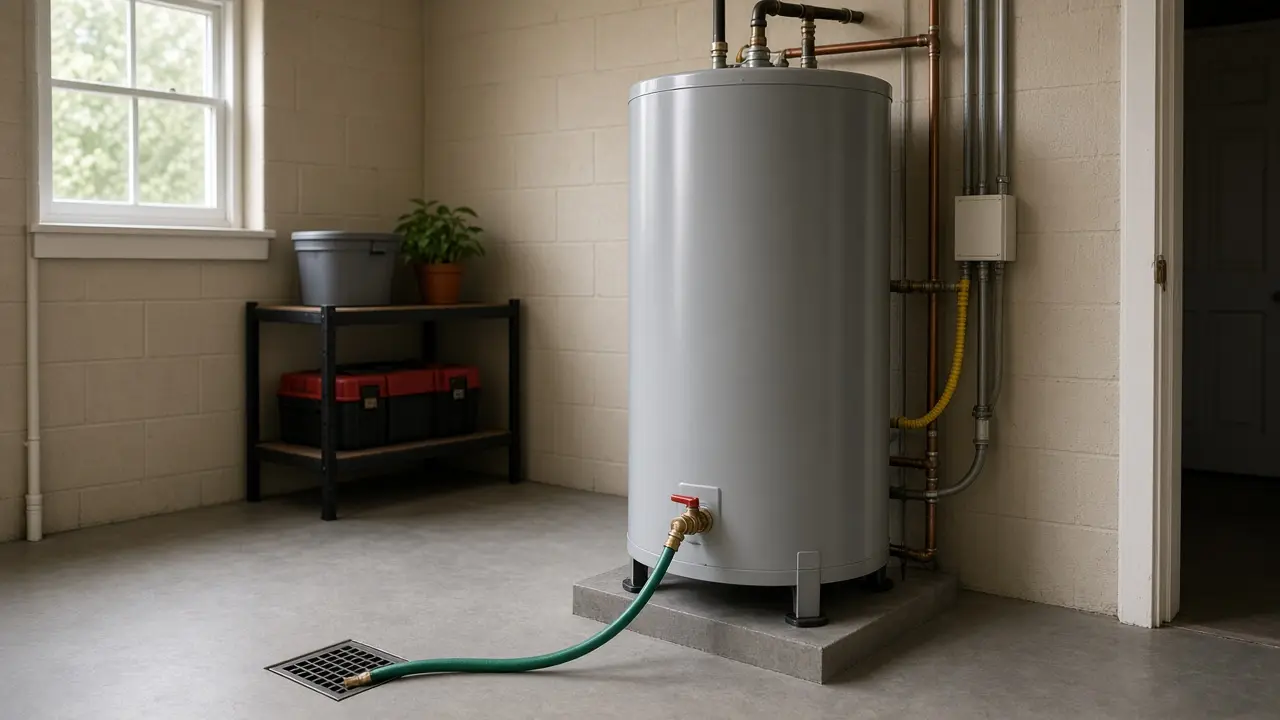
If your tank water heater pops, crackles or rumbles while it heats, you're not imagining it, and it's a common issue. In the large majority of cases the cause is sediment: minerals from your water that settle at the bottom of the tank. This guide explains what's going on, how to flush the tank yourself, and which sounds mean you should stop and call a professional.
What causes the popping sound?
Most tap water contains dissolved minerals, mainly calcium and magnesium. When water is heated, some of those minerals come out of solution and settle as a layer of scale and sediment on the tank bottom. In a gas water heater, the burner sits directly below that floor. In an electric model, the lower heating element sits near it.
Water gets trapped under and inside the sediment layer. When the burner or element heats it, that trapped water turns to steam bubbles that push up through the sediment and collapse, which creates the popping or rumbling sound. Areas with hard water see this much sooner.
Sediment matters for more than noise. It acts as insulation between the heat source and the water, so the heater works longer to reach temperature, and the extra heat at the tank bottom puts more stress on the steel.
Other sounds and what they mean
| Sound | Likely cause | What to do |
|---|---|---|
| Popping or rumbling while heating | Sediment on tank bottom | Flush the tank (below) |
| Sizzling or hissing (electric) | Sediment on the heating element, or water dripping onto it | Flush; check for leaks; element may need cleaning or replacement |
| Sizzling (gas) | Condensation dripping onto the burner, common when filling with cold water | Usually normal if brief; if constant, look for a leak |
| Ticking | Pipes expanding and contracting, or heat-trap nipples | Usually harmless |
| Screeching or whistling | A partially closed valve | Check that the cold supply valve is fully open |
| Hissing at the relief valve | Excess pressure or temperature | Call a plumber promptly |
Tools and materials
- Garden hose long enough to reach a floor drain, utility sink or outside
- Flat-head screwdriver (some drain valves open with a slot)
- Bucket
- Work gloves (the water will be hot)
- Optional: a short length of hose with a female fitting on both ends, if the drain is close to the floor
- Optional: a wet/dry vacuum for stubborn sediment at the drain
Before you start: safety
- Read your manual first. Your water heater's manual is the final word for your model. Many are available on the manufacturer's website if you've lost the paper copy.
- Electric heater: Turn off the breaker for the water heater before draining. Running the elements in an empty tank can burn them out in seconds.
- Gas heater: Set the gas control valve to "Pilot" or "Vacation" (or follow your manual's shutdown steps) so the burner doesn't fire while the tank is draining.
- Hot water burns. Tank water is often 120°F (49°C) or hotter. Let it cool for a few hours, or run the hot water at a faucet first, and keep the hose outlet secured where it can't spray anyone.
How to flush a tank water heater, step by step
- Turn off the heat source. Breaker off (electric) or gas valve to pilot/vacation (gas).
- Close the cold water supply valve on the pipe that feeds the top of the tank.
- Attach a garden hose to the drain valve near the bottom of the tank. Run the other end to a floor drain, or outside to a spot lower than the valve so gravity can help.
- Open a hot water faucet somewhere in the house, ideally a tub faucet nearby. This lets air in so the tank can drain.
- Open the drain valve. Water will flow out through the hose. At first it may come out cloudy or with grit; that's the sediment.
- Flush with the supply on. Once the tank has mostly drained, open the cold supply valve for a minute or two with the drain still open. The incoming water stirs sediment at the bottom and pushes it out. Repeat until the water from the hose runs clear.
- Close the drain valve and remove the hose. Check that the valve isn't dripping.
- Refill the tank. Open the cold water supply fully. Leave the hot faucet open until water flows steadily with no sputtering air, which shows the tank is full.
- Restore heat. Only after the tank is full, turn the breaker back on (electric) or return the gas valve to its normal setting and relight the pilot if needed, following your manual.
- Check after an hour. Look for leaks at the drain valve and listen as the heater runs. The popping should be quieter or gone.
If the drain valve clogs
Plastic drain valves can clog with sediment. Try closing and reopening the valve a few times, or briefly turn on the cold supply to push water through. If it stays blocked, don't hammer on the valve. A plumber can replace it with a full-port brass valve.
Why the noise may not go away completely
If the tank has years of sediment, one flush may not remove it all. Hardened scale can be stuck to the bottom. You may notice gradual improvement after a second flush a few weeks later. In very old tanks, persistent rumbling often means it's time to budget for a replacement.
How to prevent sediment buildup
- Flush on a schedule. Many manufacturers recommend at least annually; hard water areas may need it every six months.
- Check the anode rod. The anode rod is a sacrificial metal rod that helps protect the tank from rusting. Manufacturers typically suggest inspecting it every few years. Replacing a worn anode can extend tank life.
- Consider water treatment. If your area has hard water, a softener reduces scale throughout the house.
- Keep the temperature reasonable. The U.S. Department of Energy notes that many manufacturers ship heaters at 140°F, while 120°F is enough for most homes and saves energy. Lower temperatures may also slow scale formation.
When to call a plumber
Stop and call a licensed plumber if you notice:
- Water leaking from the tank body (not a fitting). Tank leaks can't be repaired and usually mean replacement.
- Rusty water only from the hot side, which can mean internal corrosion.
- The temperature-pressure (T&P) relief valve leaking, hissing or discharging.
- A gas smell. Leave the house and call your gas company from outside.
- Pilot or burner problems you aren't comfortable diagnosing.
Popping water heaters are common and usually a sign of maintenance that's overdue, not an emergency. A once-a-year flush keeps the heater quieter, more efficient and lasting longer.
Related guides
- Fall Home Maintenance Checklist: 15 Tasks Before Winter
- How to Fix Low Water Pressure in a Faucet by Cleaning the Aerator
Sources and further reading
- U.S. Department of Energy: Energy Saver guide (PDF), water heating section
- DOE FEMP: Home energy checklist
- Your water heater's owner's manual (model and serial number are on the rating plate)
Sources checked October 23, 2026. If something here does not match your product's manual, follow the manual and let us know.
Frequently asked questions
Is a popping water heater dangerous?
Popping from sediment is usually not an immediate danger, but it reduces efficiency and can shorten tank life. Hissing or leaking at the temperature-pressure relief valve, or any gas smell, needs immediate attention.
How often should I flush my water heater?
Many manufacturers recommend draining or flushing the tank at least once a year, and more often if you have hard water. Check your owner's manual for your model.
Can I flush a water heater that is 10 or more years old?
You can, but if the tank has never been flushed, the drain valve may clog or leak afterward. Some plumbers recommend having an older tank inspected before a first-time flush.
Will a water softener stop the popping?
Softened water forms less mineral scale, so it slows sediment buildup. It will not remove sediment already in the tank; you still need to flush it.