How to Fix a Running Toilet: Flapper vs. Fill Valve
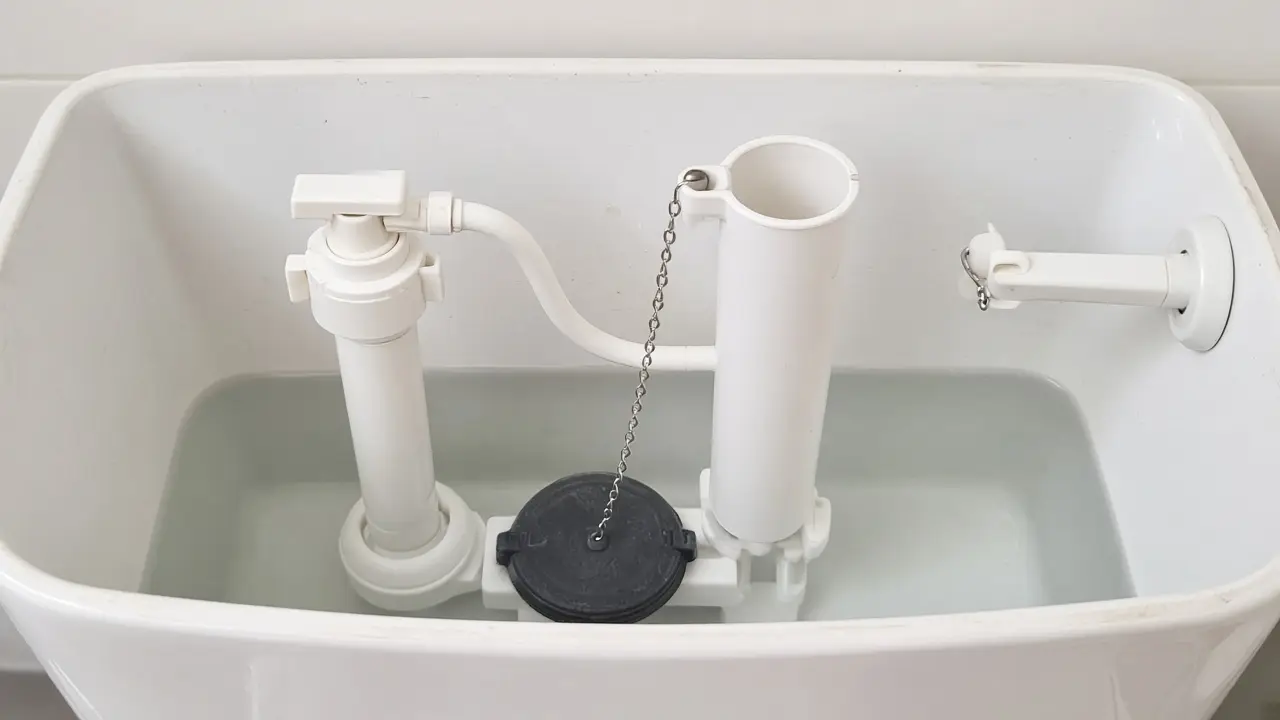
A toilet that keeps running, hisses, or refills on its own every few minutes is wasting water and money. The fix is almost always inside the tank, involves inexpensive parts, and needs no special skills. The key is figuring out which part is failing. This guide shows you how to diagnose it in five minutes and fix each cause.
How a toilet tank works (in 30 seconds)
When you press the handle, a chain lifts the flapper, a rubber seal at the bottom of the tank. Water rushes into the bowl and flushes it. As the tank empties, the flapper drops and seals again. The fill valve on the left side senses the low water level through a float and refills the tank. Excess water spills into the overflow tube in the center so the tank can't overflow onto the floor.
A running toilet means one of two things:
- Water is leaking out past the flapper, so the fill valve keeps topping the tank up, or
- The fill valve doesn't shut off, so water keeps pouring into the overflow tube.
Tools and materials
- Food coloring or toilet dye tablets
- Towel and sponge
- Replacement flapper (matched to your toilet, usually 2-inch or 3-inch)
- Replacement fill valve kit, if needed (universal kits fit most toilets)
- Adjustable wrench or channel-lock pliers
- Small bucket
- Scissors (for trimming a chain)
Step 1: Take the lid off and look
Carefully lift the tank lid and set it on a towel; porcelain lids crack easily. Look at the water level. There's usually a fill line marked on the inside of the tank or on the overflow tube.
- Water is flowing into the overflow tube? The fill valve is the problem (or the float is set too high). Go to Step 4.
- Water level is below the top of the overflow tube, but the toilet still runs or refills randomly? The flapper is likely leaking. Go to Step 2.
Step 2: Do the dye test for a flapper leak
- Add a few drops of food coloring to the tank water. Don't flush.
- Wait 15 to 30 minutes.
- Check the bowl. If colored water appears in the bowl, the flapper isn't sealing.
Flush afterward to clear the dye so it doesn't stain.
Step 3: Fix the flapper or chain
Before buying parts, check these quick causes:
- Chain too short: If the chain is tight with the flapper closed, it holds the flapper slightly open. Leave about 1/2 inch of slack.
- Chain too long: Extra chain can get caught under the flapper. Trim it, leaving a little slack.
- Debris or mineral buildup: Turn off the water, flush, and wipe the flapper and the flush valve seat (the ring it seals against) with a cloth. Mineral deposits on the seat can be gently cleaned with a non-scratch pad.
- Warped or stiff rubber: Flappers wear out. If it feels hard, cracked, or slimy and deformed, replace it.
Replacing a flapper
- Turn off the supply valve behind the toilet (clockwise) and flush to drain the tank.
- Unhook the chain from the handle lever.
- Pop the flapper's side ears off the pegs on the overflow tube, or slide the ring off the tube if your style uses one.
- Attach the new flapper the same way. If it has ears and your tube has pegs, cut off the ring if the instructions say to.
- Hook the chain to the lever with about 1/2 inch of slack.
- Turn the water back on, let the tank fill, and flush a few times to check it seals. Repeat the dye test to confirm.
Step 4: Adjust or replace the fill valve
If water is running into the overflow tube, the fill valve isn't shutting off at the right level.
Adjust the float
- Float cup style (most modern valves): There's an adjustment rod or screw on the side. Squeeze the clip and slide the cup down, or turn the screw, to lower the shut-off level. Set the water about 1 inch below the top of the overflow tube, or at the manufacturer's fill line.
- Float ball style (older toilets): A ball on an arm controls the valve. Turn the adjustment screw on top of the valve, or gently bend the arm downward so the ball sits lower.
Flush and watch the tank refill. It should stop below the overflow.
Clean the fill valve
Debris in the water supply can keep the valve from closing. On many fill valves you can turn off the water, remove the cap (often a quarter turn), and hold a cup over the open valve while briefly turning the water on to flush debris out. Check your valve's instructions.
Replace the fill valve
If adjusting and cleaning don't help, replace it. Universal fill valve kits come with instructions and fit most toilets.
- Turn off the water and flush. Sponge out the remaining water in the tank.
- Put a bucket under the tank and disconnect the supply line from the bottom of the fill valve.
- Unscrew the large locknut under the tank holding the valve in place, then lift the old valve out.
- Adjust the new valve's height per the instructions (the critical level mark usually needs to sit at least 1 inch above the top of the overflow tube).
- Insert it, tighten the locknut hand-tight plus a quarter turn. Don't overtighten; you can crack the tank.
- Reconnect the supply line, clip the refill tube onto the overflow tube, and turn the water on.
- Set the water level and check for drips under the tank.
Step 5: Check the handle
A sticky handle can keep the flapper from dropping. Make sure the handle springs back after a flush. If it sticks, tighten or loosen the nut inside the tank that holds it. Note: this nut is usually reverse-threaded (it loosens clockwise).
Safety and care
- Porcelain is heavy and brittle. Set the lid down gently on a towel.
- Never overtighten plastic nuts on a toilet; hand-tight plus a little is enough.
- Don't use in-tank bleach tablets if your flapper manufacturer warns against them; some can degrade rubber parts.
When to call a plumber
- The supply valve behind the toilet won't close, or it leaks when you turn it.
- There's water on the floor around the base of the toilet, which can mean a failed wax ring.
- The tank itself is cracked.
- You've replaced the flapper and fill valve and the toilet still runs; the flush valve seat may be damaged, which is a bigger repair.
Nine times out of ten, a running toilet is a $5 to $20 part and a 20-minute fix. Diagnose first with the overflow check and dye test, and you'll buy the right part on the first trip.
Related guides
- How to Fix a Leaky Single-Handle Faucet (Cartridge Replacement)
- Why Is My Water Heater Making Popping Noises? Causes and Fixes
Sources and further reading
- EPA WaterSense: Fix a Leak Week
- EPA WaterSense: Bathroom faucets
- Your faucet or toilet manufacturer's parts diagram and repair instructions
Sources checked October 23, 2026. If something here does not match your product's manual, follow the manual and let us know.
Frequently asked questions
How much water does a running toilet waste?
It varies with the leak. The EPA's WaterSense program notes that a leaky toilet can waste a significant amount of water every day, which is why even a quiet trickle is worth fixing.
How do I know which flapper to buy?
Most toilets use a 2-inch or 3-inch flapper. Check the flush valve opening size, look up your toilet's model number (often stamped inside the tank), or take the old flapper to the store.
Why does my toilet run for a few seconds every so often?
That 'phantom flush' usually means water is slowly leaking from the tank into the bowl, typically past a worn flapper. Do the dye test to confirm.
Do I need to turn off the water to replace a flapper?
Yes. Close the supply valve behind the toilet and flush to empty the tank so you can work on the flapper without water flowing.