How to Unclog a Bathtub Drain Without Chemicals
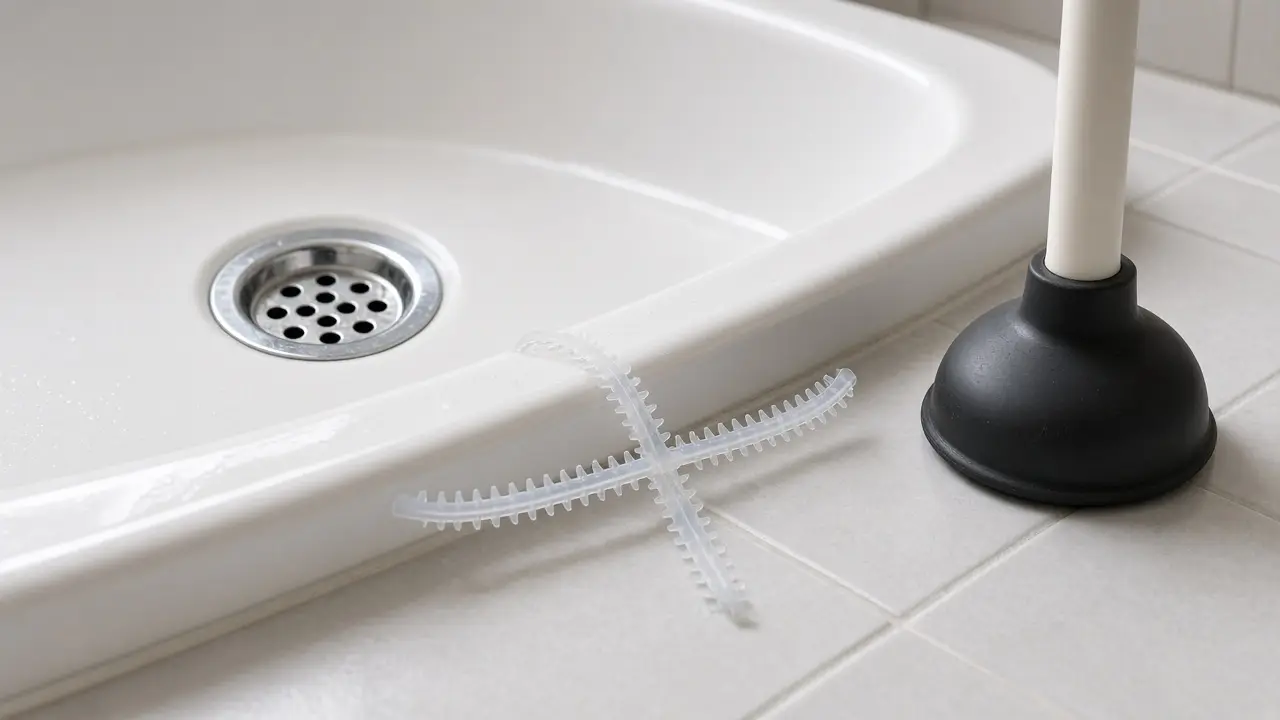
A bathtub that drains slowly, or leaves you standing in ankle-deep water, is one of the most common household plumbing problems. In most homes the cause is the same: hair bound together with soap scum, caught just below the drain opening or on the stopper mechanism. The good news is that this kind of clog is usually close to the surface, so you can clear it with simple tools instead of pouring caustic chemicals down the drain.
This guide walks through the methods in order, from least effort to most, so you can stop as soon as the water runs freely.
Why avoid chemical drain cleaners?
Chemical drain openers work by generating heat or dissolving organic material. They do work on some clogs, but they have real downsides:
- Safety. Many contain sodium hydroxide (lye) or sulfuric acid, which can burn skin and eyes. If the clog doesn't clear, you're left with a tub full of caustic water.
- Mixing hazards. Combining different drain products, or following one with bleach, can release dangerous gases.
- Hair is stubborn. A dense hair clog often survives a dose of cleaner, so you end up using a mechanical tool anyway, now with chemicals in the water.
If you have already poured chemicals in, wear rubber gloves and eye protection, don't plunge (it can splash), and tell a plumber what product you used if you call one.
Tools and materials
- Rubber gloves and an old towel
- Flashlight
- Flat-head and Phillips screwdrivers
- Plastic drain cleaning strip (often called a "zip-it" style tool), available at hardware stores for a few dollars
- Cup plunger (a flat-bottom plunger, not the flanged toilet type)
- Optional: 1/4-inch hand drain auger (drain snake), about 15 to 25 feet
- Optional: needle-nose pliers, a bucket and a wet/dry vacuum
Step 1: Remove the stopper or strainer
Most clogs sit right under the stopper, so start here. The removal method depends on your stopper type:
- Lift-and-turn or toe-touch stopper: Hold the body of the stopper and unscrew it counterclockwise. Some have a small set screw under the knob that must be loosened first.
- Push-pull stopper: Unscrew the knob on top, then unscrew the stopper body.
- Flip-it or press-fit stopper: Usually pulls straight up with a gentle twist.
- Trip-lever stopper: There's a lever on the overflow plate (the round cover below the faucet). Remove the two screws on the plate and pull the whole linkage out of the overflow opening. The plunger or rocker arm on the end is often wrapped in hair.
- Simple strainer grate: Remove the center screw and lift it out.
Clean the stopper and any linkage with a paper towel and an old toothbrush. You'll often find the entire clog here.
Step 2: Pull out hair with a plastic drain strip
Shine a flashlight into the drain. If you can see hair, feed the plastic barbed strip straight down into the drain as far as it will go, wiggle it, then pull it out slowly. The barbs grab hair on the way up. Repeat until it comes out clean. Wipe the strip on a paper towel each time and throw the debris in the trash, never back down the drain.
Run hot tap water for a minute. If it drains freely, reinstall the stopper and you're done.
Step 3: Plunge the drain
If the water is still slow, the clog may be a bit deeper in the trap. Plunging works much better when you seal the overflow opening first, because otherwise the pressure escapes through it.
- Remove the overflow plate if you haven't already, and stuff a wet rag into the opening or cover it tightly with duct tape.
- Fill the tub with a few inches of water, enough to cover the cup of the plunger.
- Place the plunger squarely over the drain, press down to push out air, then pump firmly up and down 10 to 15 times while keeping the seal.
- Pull the plunger off sharply and watch the drain.
Repeat a few rounds. If the water level drops quickly, run hot water for a minute to flush the loosened material.
Step 4: Use a hand drain auger
When a strip and plunger don't do it, a small hand auger usually will. The tub drain connects to a P-trap under the floor, and the auger needs to pass through that bend.
- It's often easier to feed the auger through the overflow opening rather than the drain itself, because the path is straighter. Remove the overflow plate first.
- Push the cable in until you feel resistance. Tighten the thumbscrew on the drum, then crank the handle clockwise while gently pushing forward. The tip will either break up the clog or hook it.
- Loosen the thumbscrew, feed more cable, and repeat until the cable moves freely.
- Pull the cable back out slowly, wiping it with a rag as it comes out. Wear gloves; it will be dirty.
- Run hot water for two to three minutes to confirm the drain is clear.
Don't force the cable hard against a solid obstruction. Forcing it can damage older pipes or a fragile drain shoe.
Step 5: Try a wet/dry vacuum
A wet/dry shop vacuum set to liquid mode can sometimes pull a clog back up. Seal the overflow opening, press the hose firmly over the drain (a rubber adapter helps), and run it for 20 to 30 seconds. This works best on loose debris close to the drain.
Step 6: Reassemble and test
Reinstall the trip-lever linkage or stopper, replace the overflow plate screws (don't overtighten into the plastic overflow), and fill the tub several inches. Pull the plug and watch it drain. A healthy tub drain empties steadily with a gentle swirl.
How to keep the drain from clogging again
- Use a hair catcher. A silicone or stainless steel catcher that sits over the drain stops most hair before it enters the pipe.
- Clean the stopper monthly. It takes two minutes and prevents buildup.
- Brush long hair before showering, so less loose hair goes down the drain.
- Run hot water after baths to keep soap scum moving.
- Avoid pouring oils, bath beads or clay masks down the drain in large amounts.
Safety notes
- Wear gloves. Drain gunk carries bacteria.
- Never mix drain chemicals, and don't plunge or snake a drain that has chemical cleaner in it without eye protection.
- Turn the auger by hand only. Power augers can whip and injure you if they bind.
- If you need to remove a tub drain flange or access panel, take photos first so you can put everything back correctly.
When to call a plumber
Call a licensed plumber if:
- Water backs up into the tub when you flush the toilet or run the washing machine. That points to a main-line clog.
- A 25-foot auger doesn't reach or clear the clog.
- You notice water stains on the ceiling below the tub, which can mean a leaking drain connection.
- The drain smells strongly of sewage even after cleaning, which can indicate a venting or trap problem.
A slow tub drain is almost always hair, and almost always fixable in under an hour with a few inexpensive tools. Start with the stopper, and you'll often be done in ten minutes.
Related guides
- How to Unclog a Kitchen Sink: Plunger, P-Trap and Snake Methods
- How to Recaulk a Bathtub: Step-by-Step for a Clean, Watertight Seal
Sources and further reading
- EPA WaterSense: Start saving water at home
- Your drain product's label: never mix chemical drain cleaners, and tell a plumber if you've already used one
Sources checked October 23, 2026. If something here does not match your product's manual, follow the manual and let us know.
Frequently asked questions
Does baking soda and vinegar unclog a bathtub drain?
The fizzing reaction can loosen light soap film, but it has little effect on a hair clog. Removing the hair mechanically with a drain snake or by pulling the stopper is far more reliable.
Can I use boiling water on a bathtub drain?
Hot tap water is fine. Many plumbing manufacturers advise against pouring boiling water into drains with PVC pipe, because very hot water can soften plastic joints over time.
How often should I clean my bathtub drain?
Pulling the stopper and removing hair every month or two prevents most clogs. A simple hair catcher over the drain reduces how often you need to do it.
Why do my tub and toilet clog at the same time?
When several fixtures back up together, the blockage is usually further down in a shared drain line or the main sewer line. That is a job for a plumber with a long auger or camera.