How to Unclog a Kitchen Sink: Plunger, P-Trap and Snake Methods
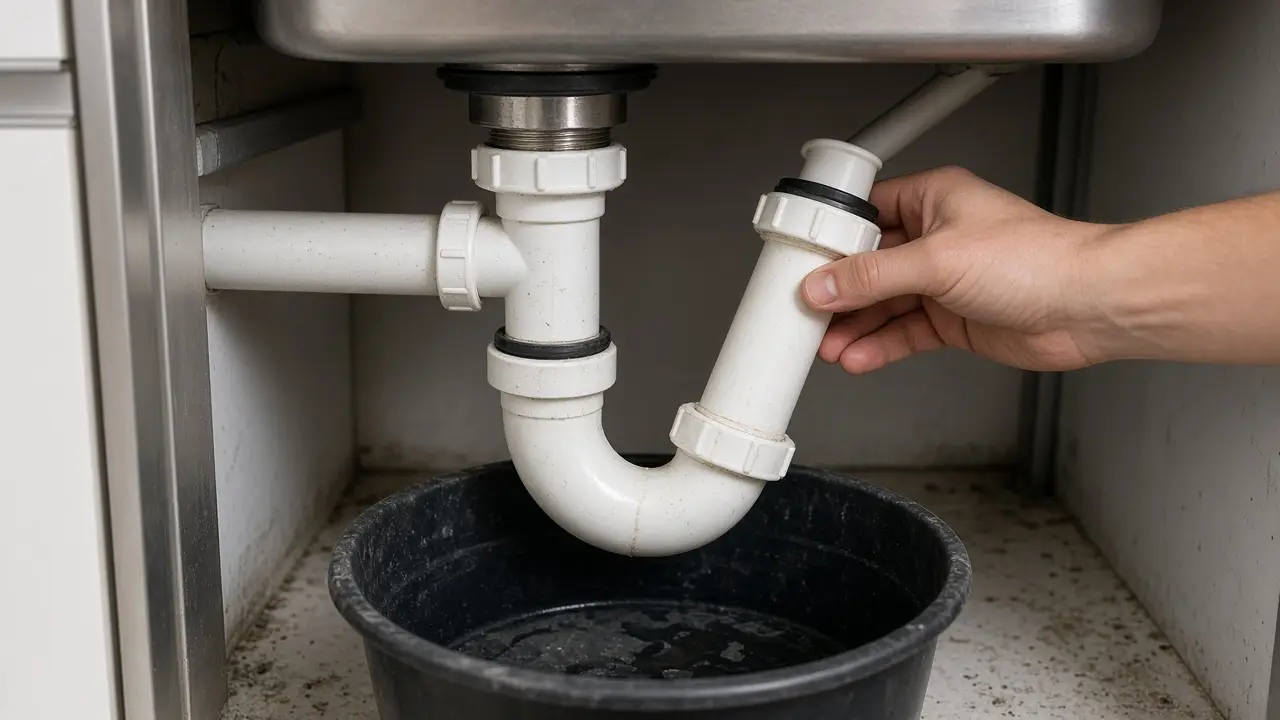
A sink full of standing dishwater is stressful, but most kitchen clogs are within reach. They usually form in the P-trap, the curved pipe under the sink, or a short distance beyond it, where grease and food build up. This guide works through methods from simplest to most involved.
Common causes of kitchen sink clogs
- Grease, oil and fats that cool and stick inside pipes
- Coffee grounds that clump
- Starchy food like rice and pasta
- Eggshells and fibrous food scraps
- Small objects that fall in
Tools and materials
- Cup plunger (flat bottom, dedicated to the sink)
- Bucket and old towels
- Rubber gloves
- Channel-lock pliers (if trap nuts are tight)
- 1/4-inch hand drain auger (snake), around 15 to 25 feet
- Wet rag or second sink stopper (for double sinks)
- Flashlight
Step 1: Check the garbage disposal first
If you have a disposal, it may be the problem. Turn it on briefly with water running. If it hums, it's jammed; see our humming disposal guide. Also check that it hasn't tripped its reset button.
If you recently installed a new disposal or dishwasher, check that the dishwasher knockout plug inside the disposal inlet was removed. This is a common installation oversight.
Step 2: Try hot water
For a slow drain (not completely blocked), run the hottest tap water for a few minutes. It can help move soft grease. Avoid pouring boiling water if you have PVC pipes, as many plumbers recommend, to avoid softening joints.
Step 3: Plunge
- Double sink: Seal the other drain with a stopper or a wet rag held firmly in place. If there's a disposal on one side, plunge the non-disposal side and seal the disposal side.
- Dishwasher: Some plumbers recommend clamping the dishwasher drain hose to prevent pushing water into the dishwasher. If you're unsure, skip this step.
- Fill the sink with a few inches of water to cover the plunger cup.
- Place the plunger over the drain, press down to remove air, and plunge firmly 10 to 15 times.
- Pull off sharply. Repeat several rounds.
If the water drains, run hot water for a minute to flush the line.
Step 4: Clean the P-trap
If plunging doesn't work, the clog is probably in the trap.
- Empty the sink as much as possible, using a cup to bail water into a bucket.
- Place a bucket under the P-trap.
- Loosen the slip nuts on both ends of the curved trap. Plastic nuts usually loosen by hand; use channel-lock pliers if needed.
- Remove the trap carefully. Water and debris will spill into the bucket.
- Clean it with a brush in another sink or outside, not the clogged sink.
- Check the pipe going into the wall (the trap arm) with a flashlight for buildup.
- Reinstall the trap. Make sure the washers are seated correctly and tighten nuts hand-tight, plus a little with pliers if needed. Don't overtighten plastic.
- Run water and check for leaks.
Step 5: Snake the drain line
If the trap was clean, the clog is further down.
- With the trap removed, feed the auger cable into the trap arm (the pipe going into the wall).
- Push until you feel resistance. Lock the cable and crank clockwise while pushing gently.
- Work through the clog, then pull the cable back, wiping it with a rag.
- Reinstall the trap and flush with hot water for several minutes.
Natural alternatives: what works and what doesn't
You may see baking soda and vinegar recommended. The fizzing can help loosen light buildup and freshen a drain, but it won't dissolve a solid grease clog. Mechanical methods are more reliable.
How to prevent kitchen clogs
- Never pour grease, oil or fat down the drain. Let it cool, then throw it in the trash.
- Scrape plates into the trash or compost before washing.
- Use a sink strainer to catch food scraps.
- Don't put coffee grounds or eggshells down the drain.
- Run cold water with the disposal and feed food gradually.
- Flush with hot water after washing greasy dishes.
Safety notes
- Wear gloves; drain water is dirty.
- If you've used chemical drain cleaner, don't plunge or remove the trap without gloves and eye protection.
- Keep a towel handy for spills.
When to call a plumber
- Several drains in the house back up at once.
- Water backs up into the sink when the dishwasher or washing machine runs.
- A 25-foot snake doesn't clear the clog.
- You find leaks or damaged pipes.
Most kitchen sink clogs are cleared with a plunger or by cleaning the trap. Start simple, and you'll likely avoid a service call.
Related guides
- Garbage Disposal Humming But Not Working? How to Unjam It
- How to Unclog a Bathtub Drain Without Chemicals
Sources and further reading
- EPA WaterSense: Start saving water at home
- Your drain product's label: never mix chemical drain cleaners, and tell a plumber if you've already used one
Sources checked October 23, 2026. If something here does not match your product's manual, follow the manual and let us know.
Frequently asked questions
Why does my kitchen sink keep clogging?
Grease, food scraps and coffee grounds are common causes. Grease cools and sticks inside pipes, then traps food particles. Avoid pouring fats down the drain and use a strainer.
Will a plunger work on a double kitchen sink?
Yes, but you must seal the other drain with a stopper or a wet rag, or the pressure escapes through it.
Should I use chemical drain cleaners in a kitchen sink?
Mechanical methods are safer to try first. If a disposal is connected, check your disposal manufacturer's guidance, since many advise against chemical drain cleaners.
How do I know if the clog is in the main line?
If several fixtures, such as the sink, tub and toilet, drain slowly or back up together, the problem is probably further down the line. Call a plumber.