How to Clean a Dryer Vent Safely (and Why It Matters)
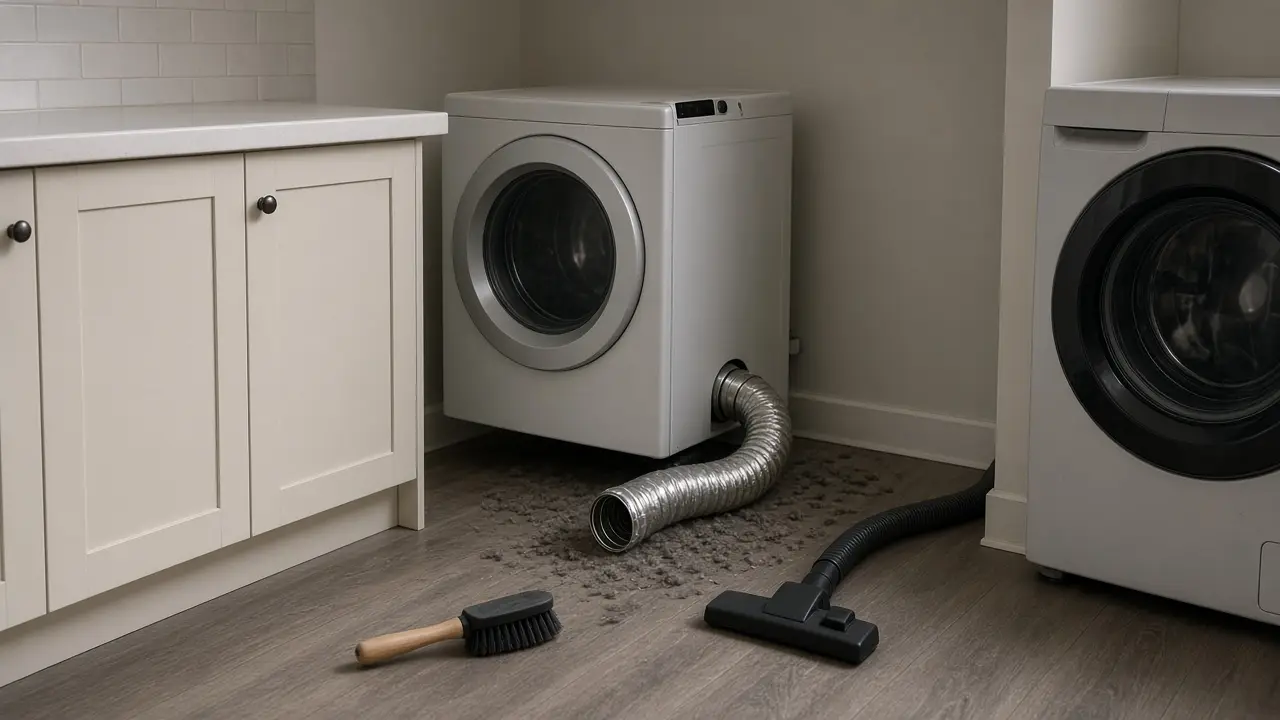
Cleaning the lint screen after each load is a good habit, but it isn't the whole story. Lint also builds up inside the dryer's vent duct and at the exterior vent hood. According to the U.S. Fire Administration, failure to clean is a leading cause of home clothes dryer fires. A clogged vent also makes the dryer work harder and take longer to dry clothes.
This guide covers cleaning the lint screen housing, the duct behind the dryer, and the exterior vent.
Signs your dryer vent needs cleaning
- Clothes take longer than one cycle to dry
- The dryer's exterior gets very hot
- The laundry room feels hot or humid when the dryer runs
- A musty or burning smell
- Lint collects around the lint screen opening or behind the dryer
- The flap on the outside vent barely opens while the dryer runs
- It's been more than a year since the duct was cleaned
Tools and materials
- Dryer vent cleaning brush kit (flexible rods that connect together, with a brush head)
- Vacuum with a hose and crevice attachment
- Screwdriver or nut driver (for duct clamps)
- Foil tape (UL-listed HVAC foil tape, not cloth duct tape)
- Work gloves, dust mask
- Optional: replacement semi-rigid or rigid metal duct and clamps
Safety first
- Unplug the dryer. For electric dryers, unplug the large cord from the wall outlet.
- Gas dryers: Turn off the gas shutoff valve behind the dryer before moving it, and move the dryer gently to avoid stressing the gas connector. If the connector looks old, kinked or damaged, have it replaced by a qualified professional. If you smell gas at any time, leave and call your gas utility from outside.
- Wear a dust mask. Lint and dust can be irritating.
Step 1: Clean the lint screen and its housing
- Remove the lint screen and clean it.
- If it looks clogged with a film (common from dryer sheets), wash it in warm, soapy water with a soft brush, rinse and let it dry fully.
- Vacuum the lint screen slot with a crevice tool or a narrow lint brush.
Step 2: Pull the dryer out and disconnect the duct
- Gently pull the dryer away from the wall, enough to reach the back.
- Loosen the clamp holding the duct to the dryer's exhaust port, and slide the duct off.
- Loosen the clamp at the wall connection, too, if you can reach it.
Step 3: Clean the dryer's exhaust port
Reach into the dryer's exhaust outlet with a vacuum hose and brush to pull out lint.
Step 4: Clean the duct
- If the duct is a short flexible piece, take it outside and shake it out, then run the brush through it.
- For the duct inside the wall, feed the brush from the inside. Connect rods one at a time, rotating the brush in the direction the kit instructions specify (usually clockwise, so the rods don't unscrew).
- Push and pull the brush gently along the duct, then pull it out and vacuum loosened lint.
- Continue to the outside if the run is long, or brush from the outside in.
Don't force rods past a sharp bend. If you hit heavy resistance, there may be a crushed section or a bird nest; inspect from both ends.
Step 5: Clean the exterior vent hood
- Go outside and find the vent hood. Remove any cover screen if it has one; screens can trap lint and some codes prohibit them on dryer vents.
- Pull out lint from inside the hood by hand and with the brush.
- Make sure the flap or damper opens and closes freely.
Step 6: Inspect and replace the duct if needed
Check the duct as you reconnect it:
- Plastic or thin foil accordion ducts are a fire risk and are discouraged by safety agencies and many manufacturers. Replace them with semi-rigid aluminum or, better, rigid metal duct, as recommended in your dryer's manual.
- Crushed or kinked sections restrict airflow. Keep the transition duct behind the dryer as short and straight as possible.
- Use clamps or foil tape at joints. Don't use screws that stick into the duct interior; they catch lint.
Step 7: Reconnect and test
- Reattach the duct to the wall and the dryer, and tighten clamps.
- Push the dryer back carefully without crushing the duct.
- Plug the dryer in (and turn the gas valve back on for gas models).
- Run the dryer on air-only or low heat for a few minutes and check outside: you should feel strong airflow and see the flap open.
How often to clean
- Lint screen: after every load.
- Lint screen housing: every few months.
- Vent duct and hood: at least yearly, and more often for large households or long vent runs.
Preventing buildup
- Don't overload the dryer.
- Wash the lint screen occasionally to remove dryer-sheet residue.
- Never run the dryer without the lint filter in place.
- Don't leave the dryer running when you leave home or go to sleep, a recommendation the U.S. Fire Administration includes in its dryer safety tips.
- Keep the area around the dryer clear of boxes, clothing and flammable items.
When to call a professional
Hire a dryer vent cleaning service if:
- The vent run is long, goes through an attic or roof, or has many bends.
- You find a bird nest or a blockage you can't reach.
- The duct runs through areas you can't access safely, such as a second-story wall or roof.
- You have a gas dryer and are unsure about moving it.
Cleaning a dryer vent takes about an hour and is one of the most valuable safety chores in a home.
Related guides
- Fall Home Maintenance Checklist: 15 Tasks Before Winter
- How to Change a Furnace Filter: Size, MERV Rating and Direction
Sources and further reading
- U.S. Fire Administration: Clothes dryer fire safety flyer (PDF)
- U.S. Fire Administration: Appliance and electrical fire safety
- Your dryer's installation instructions (venting requirements and maximum duct length)
Sources checked October 23, 2026. If something here does not match your product's manual, follow the manual and let us know.
Frequently asked questions
How often should I clean my dryer vent?
Clean the lint screen after every load. Many safety organizations and dryer manufacturers recommend cleaning the vent duct at least once a year, or more often if you dry a lot of laundry or have a long vent run.
Can I use a plastic or foil accordion duct?
Fire safety agencies and many dryer manufacturers advise against plastic or thin foil ducts. Rigid or semi-rigid metal duct is recommended. Check your dryer's installation instructions.
How do I know if my dryer vent is clogged?
Common signs include clothes taking longer than usual to dry, the dryer or laundry room getting very hot, a burning smell, or the exterior vent flap barely opening when the dryer runs.
Do gas dryers need different vent care?
The cleaning steps are similar, but gas dryers also produce carbon monoxide, so a blocked vent is especially dangerous. Be careful not to damage the gas line when moving the dryer, and call a professional if you're unsure.