Outlet Not Working? Safe Checks Before You Call an Electrician
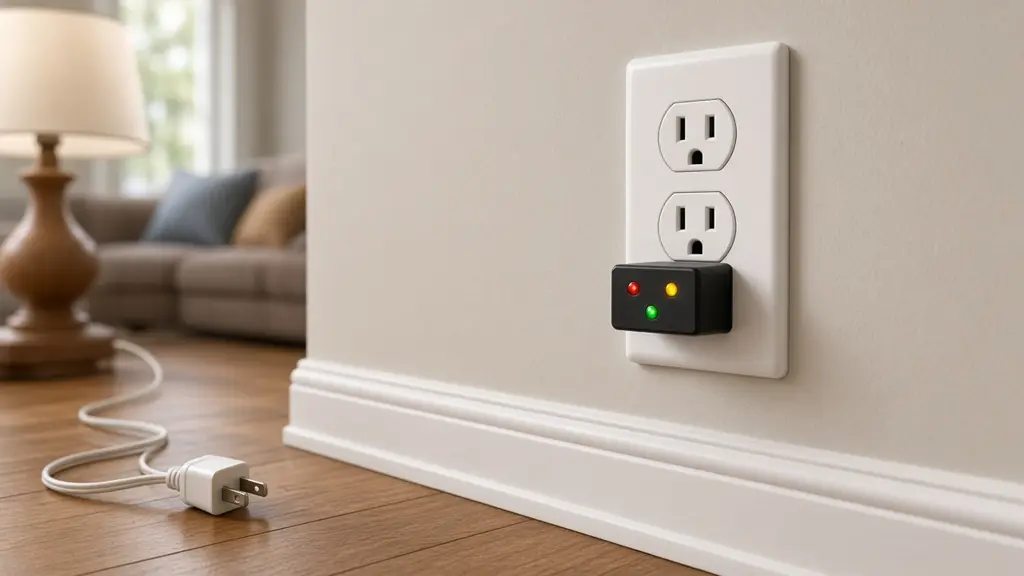
You plug in a lamp and nothing happens. Before you assume the worst, know that a dead outlet often has a simple cause you can find without opening anything: a tripped GFCI in another room, a breaker, or an outlet that's wired to a wall switch. This guide walks through those checks in order, all from the outside of the outlet, and spells out when to stop and call a licensed electrician.
Safety first: These steps don't involve removing outlet covers or touching wires. If an outlet is warm, discolored, smells like burning, buzzes, or has sparked, stop using it, turn off its breaker if you can do so safely, and call a licensed electrician. If there's smoke or fire, leave and call 911.
Step 1: Make sure the device works
It sounds obvious, but test the lamp, charger or appliance in an outlet you know works. Also check that it has its own switch turned on. A faulty power strip or a tripped switch on the strip itself fools people regularly.
Step 2: Try the wall switches
Many living rooms and bedrooms have an outlet, or just the top or bottom half of one, controlled by a wall switch near the door. This is meant for plugging in a lamp. Flip every switch in the room and try the outlet again, using both halves.
Step 3: Look for a tripped GFCI
GFCI outlets have TEST and RESET buttons. One GFCI can protect several ordinary outlets further down the circuit, sometimes in a different room. A dead bathroom, kitchen, garage, basement, laundry or outdoor outlet is very often caused by a tripped GFCI somewhere else.
Check every GFCI you can find: bathrooms (including other bathrooms), kitchen counters, the garage, the basement, outside, near the laundry, and sometimes near the panel. Press RESET firmly on each. If a GFCI won't reset, see our GFCI troubleshooting guide.
Step 4: Check the breaker panel
Open the panel door and look for a breaker in the OFF or middle position. Reset it by pushing it fully OFF and then ON, as ESFI's instructions describe. Also look for GFCI or AFCI breakers, which have a TEST button and may have tripped without looking obviously different. Our guide to breakers that keep tripping covers what to do if it trips again.
Older homes may have a fuse box. A blown fuse often has a dark or broken window. Fuse replacement must be with the same amp rating; ESFI warns that an oversized fuse is a dangerous fire hazard. If you're not sure, call an electrician.
Step 5: Test the outlet
A plug-in outlet tester (an inexpensive three-light device sold at hardware stores) can confirm whether the outlet has power and flag common wiring problems according to the light chart printed on it. A non-contact voltage tester can show whether power reaches the outlet's slots. Test either tool on a known live outlet first.
- No power at all, even after the checks above: there may be a loose connection at this outlet or another one upstream on the same circuit.
- Power, but the tester shows a fault (open ground, reversed polarity, open neutral): the outlet needs an electrician.
- Works intermittently, or only when you wiggle the plug: the outlet's internal contacts may be worn, or a connection is loose. Stop using it.
Step 6: Note what else is out
Walk around and note which other outlets and lights are dead. If a whole group stopped working at once, that suggests a breaker, GFCI or loose connection serving them all. That list is useful information for an electrician and can shorten their visit.
Common causes at a glance
| What you find | Likely cause |
|---|---|
| Outlet works when a wall switch is on | Switched receptacle, working as designed |
| Several outlets in wet areas dead | Tripped GFCI, possibly in another room |
| Breaker in middle position | Tripped breaker |
| Plug falls out or feels loose | Worn receptacle; needs replacing |
| Outlet warm, discolored, or smells | Overheating; stop using it, call an electrician |
| Tester shows wiring fault | Wiring problem; call an electrician |
| No power, nothing tripped | Possible loose connection upstream; call an electrician |
Why loose plugs and warm outlets matter
A receptacle that no longer grips plugs firmly can create a poor connection, and poor connections create heat. NFPA lists discolored or warm wall outlets and sparks from an outlet among the warning signs that call for a qualified electrician. Don't keep using an outlet like that, and don't fix it with an adapter or extension cord.
Prevent future outlet problems
- Don't overload outlets. NFPA advises only one heat-producing appliance per receptacle, and plugging major appliances directly into a wall outlet.
- Use extension cords only temporarily. If you depend on them, ask an electrician to add outlets.
- Test GFCIs monthly with the TEST and RESET buttons, as CPSC and NFPA recommend.
- Keep cover plates on every outlet and switch.
- Consider tamper-resistant receptacles if children are in the home; NFPA explains they help prevent objects from being inserted into the slots.
When to call a licensed electrician
- No power after checking switches, GFCIs and breakers
- An outlet tester shows a wiring fault
- The outlet is warm, discolored, buzzing, sparking or smells like burning
- Plugs fall out or the outlet is cracked or damaged
- The breaker trips when you reset it
- You want an outlet replaced or a GFCI or tamper-resistant receptacle installed, especially if your local rules require a licensed electrician or permit
Quick recap
Test the device, try the wall switches, reset every GFCI, and check the panel. A plug-in tester tells you whether power is reaching the outlet. If the outlet is still dead, shows a fault, or shows signs of heat, leave the covers on and call a licensed electrician.
Related guides
- GFCI Outlet Won't Reset? Safe Troubleshooting Steps
- Breaker Keeps Tripping? Safe Homeowner Checks
- How to Replace a Single-Pole Light Switch Safely
Sources and further reading
- NFPA: Electrical safety in the home
- NFPA: Electrical safety checklist (PDF)
- ESFI: Understanding your home electrical system
- ESFI: Fuse and breaker breakdown
- U.S. Fire Administration: Appliance and electrical fire safety
Sources checked October 23, 2026. If something here does not match your product's manual, follow the manual and let us know.
Frequently asked questions
Why would one outlet stop working when the others are fine?
The most common causes are a tripped GFCI elsewhere on the circuit, an outlet controlled by a wall switch, or a loose connection at that outlet or one upstream. The first two are easy to check yourself; a loose connection needs an electrician.
Can a bad outlet cause a fire?
Loose or damaged connections can overheat. NFPA lists discolored or warm outlets and sparks from an outlet among the signs to call a qualified electrician.
What does a plug-in outlet tester tell me?
A basic three-light tester shows common wiring conditions such as open ground, open neutral or reversed hot and neutral, using a chart printed on the tester. It doesn't find every problem, so treat any fault reading as a reason to call an electrician.
Half of my outlet works and half doesn't. Why?
Many rooms have 'split' receptacles where one half is controlled by a wall switch. Try the switches in the room. If none control it, the outlet may be faulty.
What are tamper-resistant outlets?
Tamper-resistant (TR) receptacles have built-in shutters that help keep objects other than plugs out of the slots. NFPA explains they reduce the risk of shock, especially for children.