GFCI Outlet Won't Reset? Safe Troubleshooting Steps
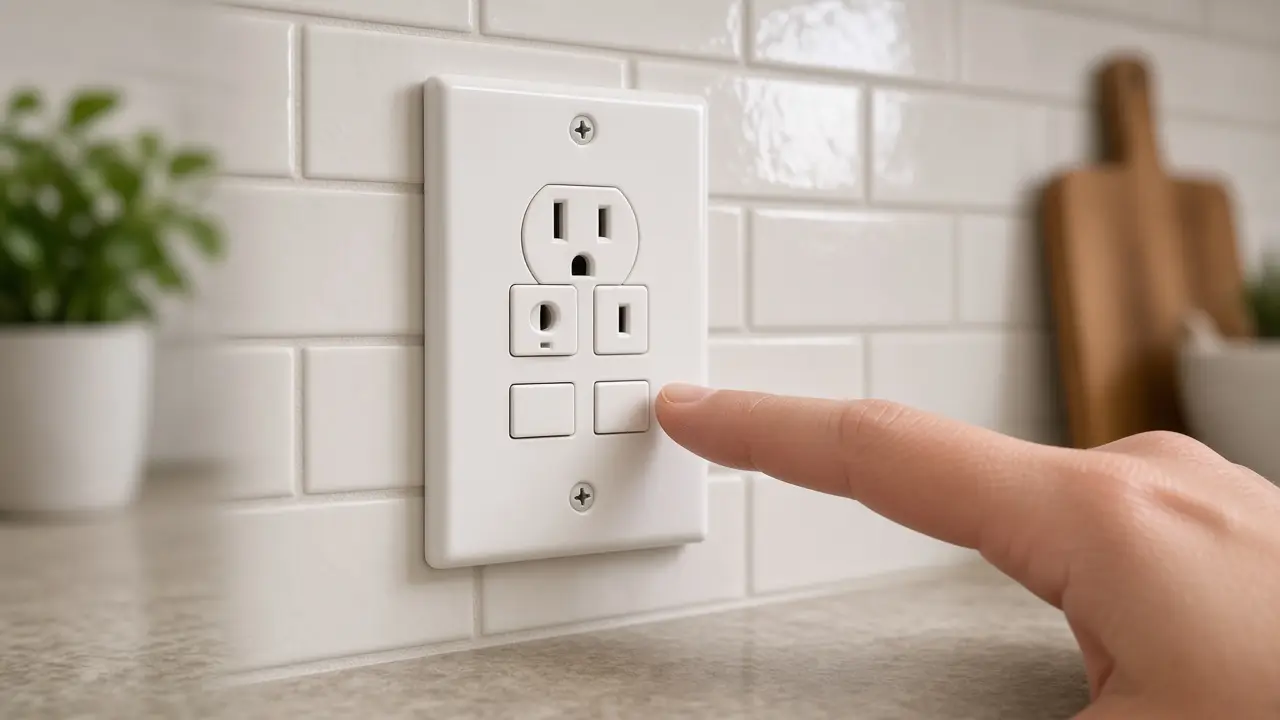
A ground-fault circuit interrupter (GFCI) outlet is the one with TEST and RESET buttons, usually found in kitchens, bathrooms, garages, laundry areas and outdoors. It shuts off power in a fraction of a second if it detects current leaking where it shouldn't, such as through water or a person. That makes GFCIs one of the most important shock-prevention devices in a home.
When a GFCI trips, you normally press RESET and power comes back. But sometimes the button won't stay in, or it resets and trips again instantly. This guide covers safe, homeowner-level checks. It does not cover opening electrical boxes or rewiring; that's work for a licensed electrician.
Safety first: If you see scorch marks, smell burning, hear buzzing or crackling, or the outlet is hot, stop. Turn off the breaker for that circuit and call an electrician. Never touch outlets with wet hands or while standing on a wet floor.
Tools you need
- A small lamp, phone charger or plug-in outlet tester (to check for power)
- Flashlight (for the electrical panel)
- Optional: a plug-in GFCI tester with a test button
That's it. You won't need to remove any cover plates for these steps.
Step 1: Unplug everything from the GFCI and its circuit
A GFCI often protects other outlets "downstream" on the same circuit, even ones in another room. A faulty appliance anywhere on that chain can trip it.
Unplug everything from the GFCI and from nearby outlets that also lost power. Then press RESET firmly until it clicks.
- It resets and stays on? One of the devices you unplugged may be the cause. Plug them back in one at a time. If the GFCI trips when you plug in or turn on a particular appliance, that appliance likely has a ground fault. Stop using it and have it repaired or replaced.
Step 2: Check the circuit breaker
Most modern GFCIs will not reset without power. If the RESET button won't push in or won't latch, power may not be reaching it.
- Go to your electrical panel. Look for a breaker that is in the middle position or in the OFF position.
- To reset a tripped breaker, push it fully to OFF first, then back to ON.
- Return and press RESET on the GFCI.
Some panels have GFCI or dual-function breakers with their own TEST button. If that breaker has tripped, reset it the same way.
Step 3: Look for another GFCI upstream
Outlets can be wired in a chain, and only the first one needs to be a GFCI to protect the rest. If the outlet you're dealing with is downstream of another GFCI that has tripped, it won't have power, so it can't reset.
Check for GFCIs in:
- Other bathrooms (one GFCI sometimes protects several bathrooms)
- The garage
- The kitchen
- Outdoors, porches and patios
- Basements and unfinished areas
- Near the electrical panel
Press RESET on each one you find, then try your original outlet again.
Step 4: Check for moisture
Water is a classic cause of nuisance tripping. Outdoor outlets, bathroom outlets near showers and garage outlets can get condensation or rain inside.
- If an outdoor GFCI tripped after a storm, leave it off and let it dry, which may take a day or more, then try again.
- Make sure outdoor outlets have an "in-use" (bubble) cover that stays closed with a cord plugged in.
- Persistent moisture problems are a reason to call an electrician; a box may need resealing.
Never try to dry an outlet with a hair dryer while it's energized or point a heater at it.
Step 5: Test the GFCI properly
Once it has reset:
- Plug in a lamp and turn it on.
- Press TEST. The lamp should go off, and the RESET button should pop out.
- Press RESET. The lamp should come back on.
The CPSC recommends testing GFCIs this way monthly. If the GFCI doesn't trip when you press TEST, it isn't protecting you and should be replaced.
Step 6: Understand the indicator light
Many GFCIs have a small LED. What it means varies by brand: on some models a red light means the device has tripped or reached end of life, while a green light means power is present. Check the manufacturer's information printed on the device or its website for your model.
Since 2006, GFCI receptacles listed to the UL standard have included an end-of-life feature. In many designs, a GFCI that can no longer protect will refuse to reset, which is deliberate.
Common causes at a glance
| What you see | Likely cause |
|---|---|
| RESET won't push in or latch | No power: tripped breaker or upstream GFCI |
| Resets, then trips immediately | Ground fault on the circuit, moisture, or faulty GFCI |
| Trips when a certain appliance runs | That appliance has a fault |
| Trips randomly, especially in rain | Moisture in an outdoor box |
| Won't trip when you press TEST | Faulty GFCI, needs replacement |
| Resets but no power | Possible wiring issue; call an electrician |
When to call an electrician
Call a licensed electrician if:
- The GFCI won't reset with the breaker on and nothing plugged in.
- It keeps tripping with nothing connected.
- It doesn't trip during the monthly test.
- You see damage, heat or burn marks.
- You'd like to replace the GFCI. Wiring LINE and LOAD terminals correctly matters; reversing them can leave downstream outlets unprotected. Many jurisdictions also have permit rules for electrical work.
Quick recap
Most "dead" GFCIs are actually waiting for power: a tripped breaker or another GFCI upstream. Unplug everything, check the panel, hunt for other GFCIs, and test monthly. If it still won't cooperate, it's time for a professional.
Related guides
- Outlet Not Working? Safe Checks Before You Call an Electrician
- Breaker Keeps Tripping? Safe Homeowner Checks
- How to Clean a Dryer Vent Safely (and Why It Matters)
- Fall Home Maintenance Checklist: 15 Tasks Before Winter
Sources and further reading
- CPSC: GFCI fact sheet (PDF)
- U.S. Fire Administration: Appliance and electrical fire safety
- Your GFCI manufacturer's instructions (printed on the packaging or the brand's website)
Sources checked October 23, 2026. If something here does not match your product's manual, follow the manual and let us know.
Frequently asked questions
Why does my GFCI reset button not push in?
Most GFCIs made in recent years will not reset unless they have power. If the reset button won't latch, first check for a tripped breaker or another GFCI upstream that has tripped.
How often should I test GFCI outlets?
The U.S. Consumer Product Safety Commission recommends testing GFCIs monthly using the TEST and RESET buttons.
Can a GFCI go bad?
Yes. GFCIs can wear out. If a GFCI won't reset even with power present and nothing plugged in, or won't trip when you press TEST, it should be replaced.
Why does my bathroom outlet with no buttons not work?
It is probably protected by a GFCI elsewhere, often in another bathroom, the garage or near the electrical panel. Find and reset that GFCI.