How to Replace an Outlet Cover Plate (and Pick the Right Child-Safe Outlet Option)
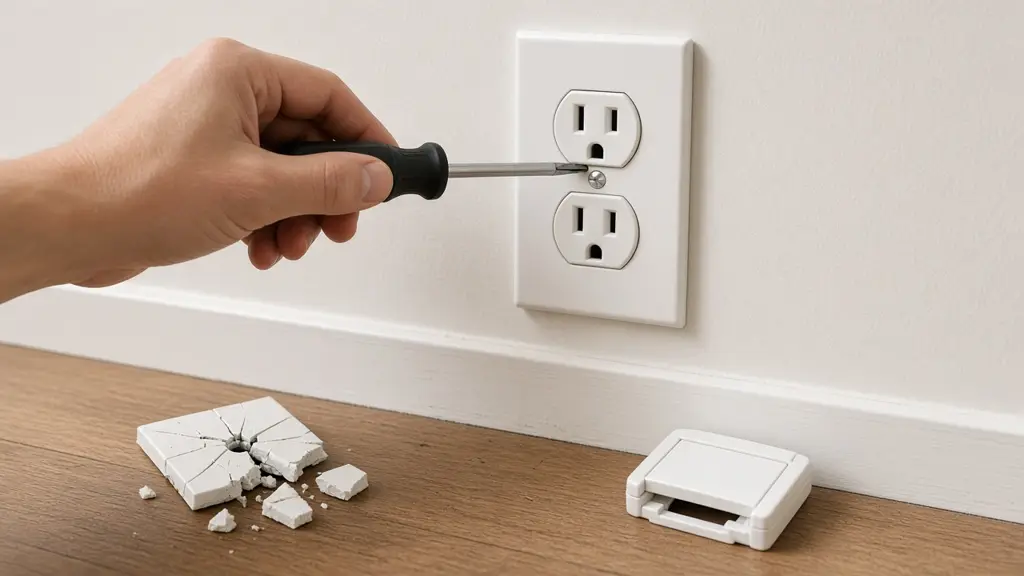
A cracked, loose or missing outlet cover plate is more than a cosmetic problem. The plate is what keeps fingers, toys and dust away from the screw terminals and wires inside the electrical box. The good news: replacing the plate itself is one of the easiest and safest home repairs there is, and it takes about five minutes.
This guide covers how to swap a cover plate the right way, how to pick a plate that actually fits, and, if you have small children at home, how the common child-safety options compare according to the U.S. Consumer Product Safety Commission (CPSC) and the Electrical Safety Foundation (ESFI).
What you'll need
- A new cover plate that matches your outlet style (see below)
- A flathead or small Phillips screwdriver, depending on the screw
- A non-contact voltage tester, or a lamp you know works
- A utility knife, only if paint has sealed the old plate to the wall
Step 1: Match the plate to your outlet
Buy the plate before you start, and bring a photo of the outlet to the store if you are unsure. The common types are:
- Standard duplex: the classic outlet with two round-ish faces. The plate has two openings and is held by one screw in the center.
- Decorator (rectangular, often called Decora): a flat rectangular face, used for most GFCI outlets and many newer outlets. The plate has one large rectangular opening and usually two screws, top and bottom, or a screwless snap-on design.
- Combination or multi-gang: two or more devices side by side, like an outlet next to a switch. Count the devices and match each opening.
- Outdoor outlets: these need a weatherproof cover, not an indoor plate. Outlets in wet locations should have an "in-use" (bubble) cover that stays closed even with a cord plugged in. If yours is missing or broken, buy a cover rated for outdoor use.
Nylon or polycarbonate plates flex a little and are less likely to crack than older brittle plastic. Oversized ("jumbo") plates are handy when the old plate hid a ragged drywall cut or paint line.
Step 2: Turn off the power and confirm it's off
You are not touching wires, but the plate screw passes very close to the outlet's live terminals, and metal plates can conduct. Make it a habit:
- Unplug everything from the outlet.
- Switch off the breaker for that circuit at the electrical panel. If the panel isn't labeled, test outlets until you find the right breaker.
- Check the outlet with a non-contact voltage tester or plug in a lamp you know works. Test both halves of the outlet, since they can be on different circuits or controlled by a wall switch.
Step 3: Remove the old plate
- Unscrew the center screw (or both screws on a decorator plate). Keep the screw if your new plate doesn't include one.
- If paint has glued the plate to the wall, score around its edge with a utility knife first so you don't peel the paint when you pull it away.
- For a cracked plate, back the screw all the way out and lift the pieces off. Don't pry sharp pieces out with your fingers near the box.
Step 4: Look before you cover it back up
With the plate off, take a 10-second look at the outlet and box. Stop and call a licensed electrician if you see:
- Scorch marks, melted plastic or a burning smell
- Loose wires, bare copper where it shouldn't be, or wires that move when you touch the outlet
- An outlet that is cracked or wobbles in the box
- No box at all, or a box with wires capped but no device installed
These are wiring problems, not cover-plate problems, and a new plate would just hide them.
Step 5: Fit the new plate
- Hold the plate over the outlet so the openings line up.
- Start the screw by hand so it threads straight into the outlet's mounting strap.
- Tighten with the screwdriver just until the plate sits snug and flat against the wall. Then stop. Overtightening is the most common reason new plastic plates crack, and the U.S. Department of Energy's Building America guidance gives the same warning.
- Turn the slot of the screw vertical if you like a neat look.
If the plate won't sit flat: the outlet may be set too deep or too far out of the box. A plate pulled tight against a crooked outlet will crack. Fixing that means loosening the outlet's mounting screws and adjusting or shimming the device, which is work on the outlet itself, so keep the power off and only do it if you are comfortable, or ask an electrician.
If the screw spins without tightening: the threads in the outlet's strap are stripped. A slightly longer screw sometimes grabs. Otherwise the outlet needs replacing.
Step 6: Restore power and test
Turn the breaker back on and plug in a lamp or phone charger to confirm both halves of the outlet work. If an outlet that worked before is now dead, see our guide to an outlet that stopped working.
Child-safe outlet options compared
If you have babies or toddlers at home, or they visit often, the cover plate is also your first line of child safety. The CPSC's childproofing guide says outlet covers and outlet plates can help protect children from electrical shock, that protectors should not be easy for children to remove and should be large enough that children cannot choke on them, and that if you are replacing receptacles, you should use a tamper-resistant type.
| Option | How it works | Good for | Drawbacks |
|---|---|---|---|
| Tamper-resistant receptacle (TR) | Built-in shutters stay closed unless both plug prongs press in at the same time | Permanent protection in every room | Replacing an outlet means wiring work; hire an electrician if you aren't experienced |
| Self-closing (sliding) cover plate | Replaces the normal plate; shutters slide shut when a plug is pulled out | Outlets you use often, like a lamp outlet | Doesn't protect while something is plugged in; kids may learn to slide it |
| Outlet box cover | A box that closes over the outlet with the plugs still in | TV, router and appliance outlets that always have cords plugged in | Bulky; check that your plugs and chargers fit inside |
| Plastic outlet caps (plugs) | Small inserts pushed into the slots | Temporary use in unused outlets | Easy to remove, easy to forget to put back, and a choking risk |
Why the experts prefer tamper-resistant receptacles
ESFI recommends tamper-resistant receptacles over plastic caps and sliding covers. It points to a Temple University study in which 100% of 2- to 4-year-olds were able to remove one type of plastic outlet cap within 10 seconds, notes that caps can be a choking hazard, and reports that about 2,400 children a year in the U.S. are treated for injuries caused by electrical outlets.
TR receptacles look like normal outlets but have spring-loaded shutters behind the slots. The shutters only open when equal pressure hits both sides at once, the way a plug's prongs do, so a hairpin or key pushed into one slot meets plastic, not metal. The National Electrical Code has required them in new homes since its 2008 edition, so if your home was built or rewired recently, you may already have them.
How to check: look for the letters TR on the outlet face. On some models the mark is on the metal strap, which you can see once the cover plate is off. Leviton, for example, notes the TR symbol may be on the strap or the body of the device.
Tip for TR outlets: if a plug is hard to push in, make sure both prongs are straight and pressing evenly. Bent or damaged plugs can make insertion difficult and can damage the receptacle.
Upgrading to TR outlets
Swapping a standard outlet for a TR outlet is a receptacle replacement: you disconnect the old device and reconnect the wires to the new one. ESFI notes that a qualified electrician can replace regular receptacles with TR receptacles without other modifications. If you have done this kind of work before and your wiring is in good condition, follow the new outlet's instructions exactly. Otherwise, it's a good job to bundle into one electrician visit for the whole house.
When to call an electrician
Call a licensed electrician instead of handling it yourself if:
- You see scorching, melting, loose or damaged wires when the plate comes off
- The outlet is warm, buzzes, sparks or smells hot
- The outlet is loose in the wall or the box is missing or broken
- You find aluminum wiring (dull silver wires) or a two-prong system you want upgraded
- You want to replace outlets with tamper-resistant, GFCI or AFCI types and aren't experienced with wiring
- You rent: check with your landlord first, since many leases make them responsible for electrical repairs
Related guides
- Outlet Not Working? Safe Checks Before You Call an Electrician
- GFCI Outlet Won't Reset? Safe Troubleshooting Steps
- How to Replace a Single-Pole Light Switch Safely
Sources and further reading
- CPSC: Childproofing Your Home
- ESFI: How Protected Are Children From Electric Shock? A Tamper Resistant Receptacle Survey
- ESFI: Safety from the Inside: Tamper Resistant Receptacles (TRRs)
- U.S. DOE Building America Solution Center: Air Seal Electric Outlets and Switches
- Leviton: Tamper-Resistant (TR) Receptacles product bulletin (PDF)
Sources checked 2026-11-12. Electrical codes are adopted locally and change over time. If your situation differs, follow your local code and a licensed electrician, and let us know.
Frequently asked questions
Do I need to turn off the power to change an outlet cover plate?
You are only removing a plastic or metal plate, not touching wires, but the plate screw sits close to live parts. Turning off the breaker and confirming the outlet is dead with a non-contact voltage tester or a lamp takes a minute and removes the risk, so it is the safe habit, especially with metal plates.
Why did my new outlet cover crack when I tightened it?
Overtightening is the usual cause. Plastic plates only need to be snug against the wall. If the outlet sits too deep or crooked in the box, the plate gets pulled out of shape as you tighten; that needs the outlet adjusted or shimmed, which means working on the device itself with the power off.
Are plastic outlet plugs safe for babies?
The CPSC says outlet protectors should not be easy for children to remove and should be large enough that children cannot choke on them. ESFI reports a Temple University study in which every 2- to 4-year-old tested removed one type of plastic cap in under 10 seconds, and recommends tamper-resistant receptacles as the permanent fix.
How do I know if my outlets are tamper-resistant?
Look for the letters TR on the face of the outlet, or on the metal mounting strap once the cover plate is off. Inside the slots you can usually see plastic shutters that only open when both prongs of a plug push in at the same time.
Can I swap a regular outlet for a tamper-resistant one myself?
It is a receptacle replacement, which means disconnecting and reconnecting wires. ESFI notes that a qualified electrician can replace regular receptacles with TR receptacles without other modifications. If you are not experienced with wiring, or you find aluminum wiring, scorched wires or no ground, hire a licensed electrician.