How to Bleed a Radiator (Hot-Water Heat): Step-by-Step Guide
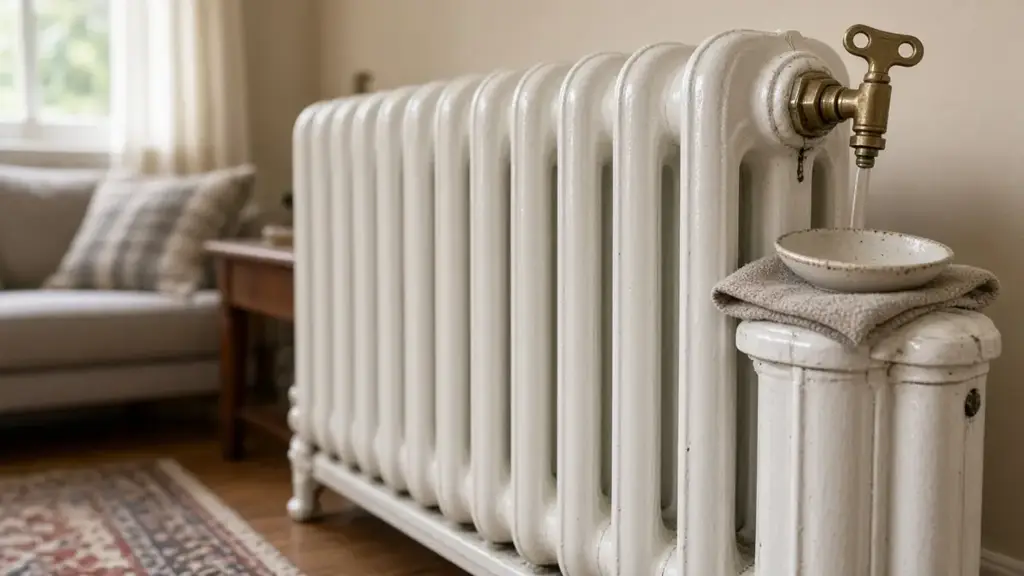
If one of your radiators is warm at the bottom but cool at the top, or it gurgles when the heat comes on, there's a good chance air is trapped inside it. Air collects at the highest point of a hot-water radiator and keeps hot water from filling it, so part of the radiator stays cold. Letting that air out is called bleeding the radiator, and on most hot-water systems it's a five-minute job with a small key and a rag.
This guide covers hot-water (hydronic) radiators and baseboard units with a manual bleed valve. It follows guidance from boiler maker Weil-McLain, U.S. energy-efficiency publications and heating-industry training material. Systems vary, so if your boiler manual says something different, follow the manual.
Hot water or steam? Check first
Bleeding only applies to hot-water systems. Before you start, figure out which kind you have:
- Hot-water system: The boiler has a combination pressure/temperature gauge, there's usually an expansion tank near the boiler, and each radiator has a small bleed valve near one top corner. It's typically a round plug with a small square stem in the middle, or a slotted screw. Baseboard units may have a small vent at one end under the cover.
- Steam system: The boiler has a sight glass showing the water level, and radiators usually have a larger, bullet- or cylinder-shaped air vent sticking out of the side, often about halfway up. Many steam radiators also have only one pipe connected.
If you have steam heat, don't use the steps below. Smarter House, the home-energy site of the American Council for an Energy-Efficient Economy (ACEEE), describes steam systems as needing their own maintenance (keeping the water level right, removing sediment, making sure air vents work) and advises checking with a heating technician, because steam boilers produce high-temperature steam under pressure.
Signs a radiator needs bleeding
- It's cool at the top and warm at the bottom while the heat is running.
- You hear gurgling, bubbling or knocking from the radiator or baseboard.
- One room is noticeably colder than the rest, even though the thermostat is calling for heat.
Weil-McLain's user manuals list "air in system" as a common cause when some radiators or baseboard units don't heat or are noisy, and the fix they give is to bleed air through the air vents on the radiators or baseboard units. The same troubleshooting table lists low system pressure as another cause, which is why you check the boiler gauge at the end.
Safety first
- Turn the heat off and let things cool. Hot-water systems run under pressure, and the water can be hot enough to scald. Turn the thermostat down so the boiler and pump stop, and wait until the radiators are cool to the touch before opening any valve.
- Open the valve only a little. A bleed valve needs a quarter to half a turn at most. Unscrewing it all the way can let the stem come out, and then water will keep coming until someone puts it back.
- Only open the bleed valve. Don't loosen pipe fittings, unions or the boiler's pressure-relief valve to "let air out." Those aren't bleed points.
- Protect your floor. A little water always comes out at the end. Keep a rag and a small container under the valve.
- Renters: Check with your landlord or building manager first. In many buildings the heating system is theirs to maintain.
What you'll need
- Radiator bleed key, sold at hardware stores for a few dollars. Some valves take a flat-blade screwdriver instead.
- Old towel or rag
- Small container, such as a cup or shallow dish
- A flashlight if the valve is in a dark corner or under a baseboard cover
Step 1: Turn off the heat and let radiators cool
Set the thermostat down (or to off) so the boiler and circulator pump stop. Give the radiators time to cool, usually at least 30 minutes to an hour depending on how hot they were.
Step 2: Start with the right radiator
If several radiators need it, a common approach is to start with the one closest to the boiler on the lowest floor and work your way up and outward, finishing with the highest radiators. Air rises, so the upper floors often collect the most.
Step 3: Find the bleed valve
Look at the top corner of the radiator, usually on the end opposite the main supply valve. You're looking for a small round fitting with a square stem or a slot in the center. On baseboard heat, remove or lift the end cover to look for a small vent near the end of the pipe.
Step 4: Open the valve slowly
- Hold the rag and container just under the valve.
- Fit the key onto the square stem (or the screwdriver into the slot).
- Turn it counterclockwise slowly, a quarter turn to start. Don't open it more than about half a turn.
- You should hear a hiss as air escapes.
If nothing happens at all, the valve may be painted over or clogged, or the system pressure may be low. Don't force it with pliers. A stuck or broken bleed valve is a job for a technician.
Step 5: Close it when water comes out
Keep the valve open while air hisses out. When the hissing stops and water starts coming out in a steady stream with no sputtering, turn the key clockwise to close the valve. Snug is enough; overtightening can damage the seat.
Smarter House (ACEEE) describes the same approach: hold a pan under the valve and open it until all the air has escaped and only water comes out.
Wipe up any drips and repeat on the next radiator that needs it.
Step 6: Check the boiler pressure
Bleeding lets out a little water along with the air, and in a sealed (closed) system that can lower the pressure. Go to the boiler and read the pressure/temperature gauge:
- Compare the reading with the range in your boiler manual or on the installer's label. As a reference, the National Oilheat Research Alliance's hydronics training material says most residential pressure-reducing valves are set at about 12 psi, which suits a typical two-story house with the boiler in the basement. Taller homes need more.
- Many systems refill automatically through a pressure-reducing (fill) valve. If yours has one, the pressure should recover on its own.
- If pressure is clearly below where it normally sits and doesn't come back, or you aren't sure how your fill valve works, call a heating technician instead of guessing. Overfilling can make the relief valve open; a master plumber writing in Fine Homebuilding notes that if a boiler's pressure-relief valve reaches 30 psi, it will open.
Step 7: Turn the heat back on and recheck
Turn the thermostat back up and let the system run. After 20 to 30 minutes, feel the radiators you bled. They should now be warm across the top. If one is still cool at the top, let it cool down and bleed it again; sometimes air from elsewhere in the system moves into it once the water is circulating.
If bleeding doesn't fix it
Air isn't the only reason a radiator stays cold. Before calling for service, check:
- Is the radiator's supply valve fully open? The larger valve where the pipe enters the radiator can get turned down. Open it fully (counterclockwise) by hand. Don't force a valve that won't move.
- Is a thermostatic radiator valve (TRV) set low? If the radiator has a numbered head on the valve, turn it up.
- Is furniture or a heavy curtain blocking it? Energy-efficiency guides from Purdue Extension and DOE advise keeping radiators and baseboards clear of furniture, carpets and drapes so air can circulate.
- Does the problem keep coming back? Needing to bleed the same radiator every week usually means air is getting into the system somewhere.
When to call a heating technician
Bleeding a hot-water radiator is a reasonable DIY job. Call a licensed heating technician (or your landlord) if:
- You have steam heat, or you aren't sure which type you have.
- The bleed valve is stuck, broken, leaks after closing, or the stem came out.
- Boiler pressure drops after bleeding and doesn't recover, or you have to add water often. Weil-McLain warns that frequently needing to add makeup water points to leaks that should be repaired right away, because constant fresh water can lead to mineral deposits and boiler damage.
- The pressure-relief valve on the boiler drips or discharges water. For water boilers, Weil-McLain says an often-weeping relief valve may mean the expansion tank isn't working properly.
- Radiators stay cold after bleeding, or several rooms have uneven heat.
- You see rusty or black water from the bleed valve, or you smell gas or exhaust. For a gas smell, leave the house and call your gas utility or 911 from outside.
Weil-McLain's manuals also say the boiler should be inspected and started up every year at the beginning of the heating season by a qualified service technician. That's a good time to have them show you how your system fills and where its vents are.
Related guides
- Fall Home Maintenance Checklist: 15 Tasks Before Winter
- How to Change a Furnace Filter: Size, MERV Rating and Direction
- Why Is My Water Heater Making Popping Noises? Causes and Fixes
Sources and further reading
- Weil-McLain: Boiler User's Manual (CGa, CGi, EG, PEG, LGB) – troubleshooting
- Weil-McLain: CGs Boiler User's Manual
- U.S. Department of Energy: Energy Savers – Tips on Saving Money and Energy at Home (PDF)
- Purdue Extension: ConservationWise – Saving Energy in Your Home: Heating and Cooling (PDF)
- Smarter House (ACEEE): Heating System Energy Saving Tips
- National Oilheat Research Alliance: Advanced Hydronics (PDF)
- Fine Homebuilding: Purging Air in Hydronic Heating Lines
Sources checked November 1, 2026. If something here does not match your boiler's instructions, follow the manufacturer and let us know.
Frequently asked questions
How do I know if my radiator needs bleeding?
The classic sign is a radiator that is warm at the bottom but cool at the top while the heat is running, or one that gurgles or knocks. Weil-McLain's boiler manuals list air in the system as a common cause of radiators or baseboard units that don't heat or are noisy, and the correction is to bleed air through the vents on the radiators or baseboard units. If a radiator is evenly hot from top to bottom, it doesn't need bleeding.
How often should I bleed my radiators?
Energy-efficiency guides from the U.S. Department of Energy and Purdue Extension suggest removing trapped air from hot-water radiators once or twice a heating season, and calling a professional if you're unsure how. Most people do it at the start of the season and again if a radiator starts to heat unevenly.
Should the heat be on or off when I bleed a radiator?
Off. Turn the thermostat down so the boiler and circulator stop, and let the radiators cool before opening a bleed valve. Water in a running hot-water system can be hot enough to scald, and it's under pressure.
Can I bleed a steam radiator?
Not the same way. Steam radiators usually have an automatic air vent on the side instead of a small bleed valve, and you should never open or remove it while the system is running. Steam boilers produce high-temperature steam under pressure, so leave steam system maintenance and vent replacement to a heating technician if you're not sure what you have.
What should my boiler pressure be after bleeding?
It depends on your house and system, so check your boiler manual or the label from your installer. As a reference point, the National Oilheat Research Alliance notes that most residential pressure-reducing valves are set at about 12 psi, which suits a typical two-story house with the boiler in the basement. If pressure drops noticeably after bleeding and doesn't recover, or you keep needing to add water, have a technician check the system.