Shower Head Low Pressure? How to Descale It or Know When to Replace It
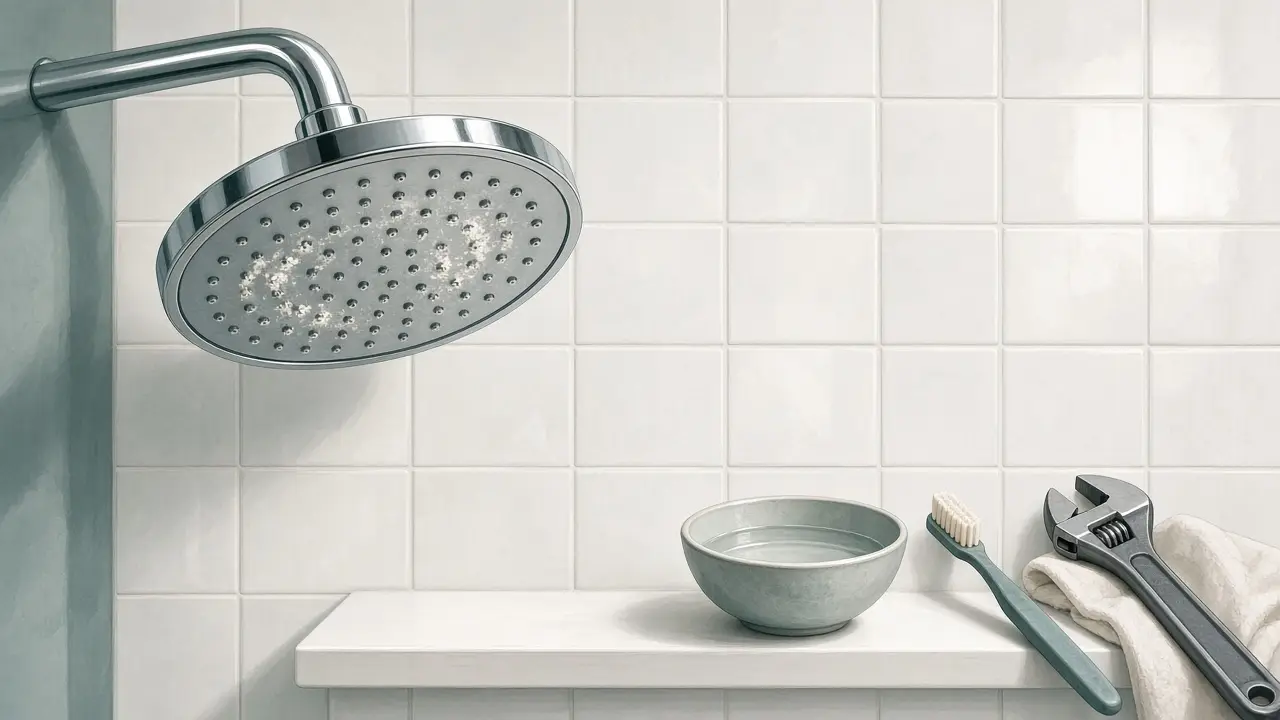
A shower that used to feel strong and now trickles or sprays in random directions is one of the most common bathroom complaints. The good news is that the cause is usually inside the shower head itself: mineral scale from hard water, or grit caught in the small screen and flow restrictor at its inlet. Both are easy to clean with basic tools and a bowl of vinegar.
This guide follows care instructions from shower manufacturers Delta and Moen and showerhead information from the U.S. Environmental Protection Agency's WaterSense program. If your showerhead came with its own manual, follow that first, since designs differ.
First, figure out where the problem is
Spend two minutes narrowing it down before you take anything apart.
- Is it only this shower? Turn on the bathroom sink and the tub spout (if you have one). If they run strongly and only the shower head is weak, the problem is almost certainly the shower head or the short pipe feeding it.
- Is it every faucet in the house? If the kitchen, bathroom sinks and outdoor spigot are all weak, a shower head cleaning won't fix it. Check that the main shutoff valve is fully open, ask neighbors whether they're affected, and contact your water utility or a plumber about the supply or a pressure-reducing valve.
- Is it only hot water? If hot is weak but cold is fine at the same shower, the issue may be with the water heater or the mixing valve, not the head.
- Did it start after plumbing work? Delta notes that debris screens and flow restrictors can clog after the water has been turned off for repairs, because loosened sediment travels down the lines.
- Look at the spray. Some nozzles blocked, some spraying sideways, or white or tan crust on the face all point to mineral buildup.
What you'll need
- Adjustable wrench or slip-joint (channel-type) pliers
- Masking tape or a soft cloth to protect the finish
- White vinegar and a bowl or zip-top bag big enough for the head
- Old soft toothbrush
- A thin wire, straightened paper clip or wooden toothpick
- Thread seal tape (PTFE, "plumber's tape"), only if the head's instructions call for it
- A towel to protect the tub or shower floor
Step 1: Try the quick wipe first
Many modern shower heads have soft rubber nozzles. Delta's care guide says to wipe over the rubber spray holes with your fingertips to loosen and break away mineral deposits. Turn the water on afterward and see whether the spray evens out. If it helps but doesn't fully fix it, move on to a full cleaning.
Step 2: Remove the shower head
- Turn the shower off and lay a towel in the tub so a dropped part doesn't chip anything.
- Wrap the jaws of your wrench or pliers with masking tape, or put a cloth over the nut. Moen recommends this to prevent scratching the finish.
- Hold the shower arm (the pipe coming out of the wall) steady with one hand so you don't twist it, and turn the shower head's connecting nut counterclockwise. Many heads come off by hand once the nut is loosened.
- Keep track of the rubber washer or O-ring inside the connection. The EPA's WaterSense page suggests checking it, and replacing it if needed, when you work on a shower head.
Step 3: Flush the shower arm
With the head off, debris in the pipe can be cleared before you put a clean head back on. Delta's procedure for a tub/shower faucet is:
- Turn the handle to the fully on, mixed hot-and-cold position.
- Run the water through the tub spout for two minutes without moving the handle.
- Divert the water up to the shower arm and flush it for two minutes too.
Point the open arm into the tub or wall so you don't spray the bathroom. Delta also reminds you to make sure cold water flows first and that the handle's rotational limit stop is set correctly, because that stop helps prevent very hot water. Stay at a comfortable temperature while flushing.
Step 4: Clean the screen and flow restrictor
Look inside the inlet of the shower head. Most have a small mesh screen and a flow restrictor, a disc with a small opening that limits how many gallons per minute pass through.
- Rinse grit from the screen under the tap. If it's stuck in place, leave it there and rinse it in place.
- Use a toothpick or thin wire to clear any debris from the restrictor opening, gently.
- Don't drill out or remove the restrictor. Delta describes these restrictors as required for shower heads. Removing one can push the fixture past water-efficiency limits and doesn't fix the scale that's really causing the problem.
Step 5: Soak it in vinegar
Delta and Moen both recommend a 50/50 mix of white vinegar and water for mineral deposits.
- Fill a bowl or bag with the vinegar mix and fully submerge the head, or at least its face.
- Soak for several hours, as Delta's guide suggests. Very heavy scale may need a longer soak.
- Scrub the face and nozzles with an old soft toothbrush.
- Moen's advice for clogged heads is to clean the inlet and outlet holes with a thin wire, then flush the head with clean water.
- Rinse thoroughly with plain water.
Avoid harsh cleaners. Moen warns never to use cleaners containing abrasives, ammonia, chlorine, bleach or other harsh chemicals, because they can damage the finish. Don't mix vinegar with bleach products either; follow the cleaning product's label.
Can't remove the head? You can tie a bag of the vinegar mix around it so the face sits in the liquid. Check your manual first, since some finishes shouldn't be soaked for long.
Step 6: Reinstall and test
- Make sure the washer or O-ring is seated in the nut.
- Thread the head onto the shower arm by hand. Follow the manufacturer's instructions on thread seal tape; many heads that seal with a rubber washer don't need it.
- Snug it with a taped wrench, but don't overtighten. Too much force can crack plastic parts or damage the arm.
- Turn the water on and check for drips at the connection. Tighten slightly more only if it drips.
If the spray is strong and even again, you're done.
When to replace the shower head instead
Cleaning fixes most cases, but replacement makes sense when:
- The spray is still weak or patchy after a thorough soak and the shower arm flushed strongly.
- Nozzles are cracked, the body is split, or the head leaks around the face.
- The finish is corroded or flaking.
- You want a different spray, or a more efficient model.
Choosing a new one. According to the EPA, standard showerheads use 2.5 gallons per minute (gpm), while showerheads that earn the WaterSense label must use no more than 2.0 gpm. The EPA also says WaterSense models are independently certified for spray force, spray coverage and pressure compensation, which is meant to make sure they deliver a satisfactory shower even at the lower flow. Some states and cities set lower limits than the federal one, so buy from a local store or check the package for your area's rules.
A newer head designed for good spray at its rated flow is usually a better fix than removing a restrictor from an old one.
When to call a plumber
Call a licensed plumber if:
- Pressure is low at every fixture in the house, or it dropped suddenly everywhere.
- Hot water is weak at several faucets, which may mean a water heater or supply line problem.
- The shower arm is loose in the wall, leaks behind the wall, or turns when you unscrew the head.
- Water still trickles from a clean, new shower head, which can mean a problem in the shower valve itself.
- You see signs of a hidden leak: stains, soft drywall, or mold near the shower wall.
Related guides
- How to Fix Low Water Pressure in a Faucet by Cleaning the Aerator
- How to Fix a Leaky Single-Handle Faucet (Cartridge Replacement)
- How to Winterize Outdoor Faucets and Hose Bibs
Sources and further reading
- U.S. EPA WaterSense: Showerheads
- Delta Faucet Support: Why does my faucet have low water pressure?
- Delta Faucet: Faucet Care and Maintenance Guide (PDF)
- Moen: Caring for your Moen products (PDF)
- Moen Support: How do I clean my Nebia by Moen showerhead?
Sources checked November 3, 2026. If something here does not match your product's instructions, follow the manufacturer and let us know.
Frequently asked questions
Why did my shower pressure suddenly drop?
If it dropped in just one shower, the usual cause is mineral scale or debris blocking the shower head's nozzles, inlet screen or flow restrictor. Delta notes that debris often gets loosened into the lines after the water has been shut off for repairs. If every faucet in the house lost pressure at once, the cause is upstream, such as a partly closed valve, a pressure regulator or a utility issue.
Can I clean a shower head with vinegar?
Yes. Delta and Moen both recommend a 50/50 solution of white vinegar and water for removing mineral deposits, soaking for several hours and scrubbing stubborn spots with a toothbrush. Moen warns never to use cleaners containing abrasives, ammonia, chlorine or bleach, because they can damage the finish.
Should I remove the flow restrictor to get more pressure?
No. Flow restrictors are a required part of the showerhead design, and removing one can put the fixture out of compliance with water-efficiency rules where you live. Clean the restrictor and screen instead. If a clean showerhead still feels weak, replace it with a model designed to perform at your flow rate.
Do low-flow showerheads always feel weak?
Not necessarily. The EPA says showerheads that earn the WaterSense label use no more than 2.0 gallons per minute, compared with 2.5 gpm for standard models, and must be independently certified for spray force, spray coverage and pressure compensation so the shower is equal to or better than conventional models.
How often should I descale my shower head?
There's no single schedule because it depends on how hard your water is. A good rule is to clean it whenever the spray starts to look uneven or nozzles start spraying sideways, and to flush the shower arm whenever the house water has been shut off for plumbing work.