Toilet Keeps Clogging? Causes and Fixes That Actually Last
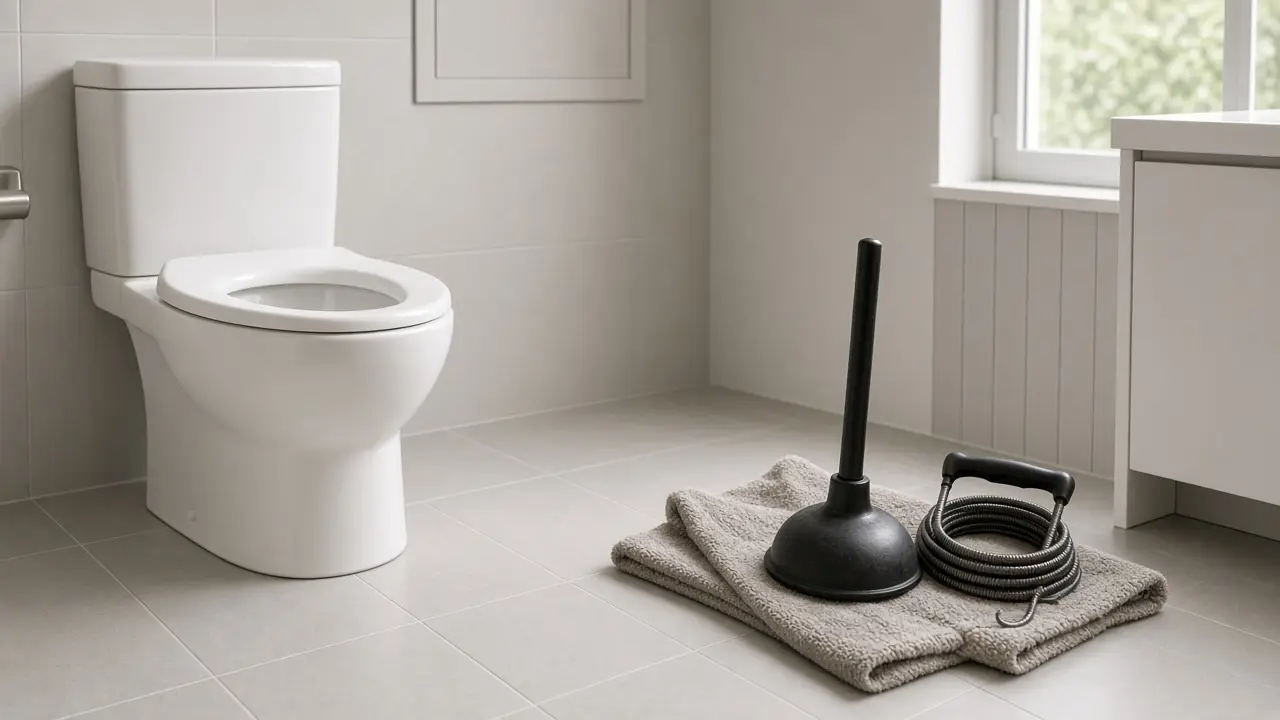
A toilet that clogs once is an annoyance. A toilet that clogs every few days is telling you something is wrong, and plunging it again won't fix that. Repeat clogs almost always come down to one of four things: something stuck in the toilet, a weak flush, what's being flushed, or a problem farther down the drain or vent.
This guide walks through those causes in the order that's easiest to check, using the troubleshooting steps toilet makers such as American Standard and Kohler publish for their own products.
Before you start: safety and cleanup
- Stop flushing a clogged toilet. If the bowl is full, another flush can overflow it. If water is rising, take the lid off the tank and push the flapper down to stop the flow, or turn the shutoff valve behind the toilet clockwise.
- Wear rubber gloves and eye protection, and lay old towels around the base.
- Skip the chemical drain cleaner. Drain chemicals are hazardous to skin and eyes, many aren't labeled for toilets, and if they don't work you're left plunging caustic water. Never mix cleaners.
- Wash your hands and tools afterward, and disinfect the floor around the toilet.
Tools you may need
- Flange plunger (the kind with a soft extension that fits into the toilet drain opening, not a flat cup plunger)
- Closet auger (also called a toilet auger), a short drain snake with a sleeve that protects the porcelain
- Rubber gloves, old towels, a bucket
- Small mirror, a stiff wire or straightened coat hanger, and white vinegar (for cleaning rim holes)
Step 1: Clear the current clog properly
Many "repeat" clogs are really one clog that was only half cleared.
- Make sure there is enough water in the bowl to cover the plunger's rubber cup. Add water from a bucket if needed, or bail some out into the bucket if it's nearly full.
- Fit the flange into the drain opening so the cup seals.
- Push down slowly the first time to push the air out, then plunge with firm in-and-out strokes 15 to 20 times, keeping the seal. The pulling stroke matters as much as the push.
- If the water drains, pour a bucket of water into the bowl. It should go down quickly with a swirl. If it drains slowly, the blockage is still there.
If plunging doesn't work, or the toilet clogs again within days, use a closet auger:
- Pull the cable back so only the tip shows at the end of the sleeve.
- Set the curved end of the sleeve in the bottom of the bowl, pointing into the drain opening.
- Crank the handle clockwise while gently pushing the cable down. When it stops, keep cranking to work through or hook the obstruction.
- Pull the cable back while still cranking. Check the tip; it often comes back with the culprit (a wipe, a cotton swab, a small toy).
- Repeat two or three times, then test with a bucket of water and a normal flush.
A hidden object is the number one cause of a toilet that clogs over and over. A comb, toothbrush, toy or wad of wipes can lodge in the trapway and catch paper every time. If an auger can't retrieve it, the toilet may need to come off the floor so the object can be pushed out from below; that's a reasonable DIY job for some homeowners, but it means a new wax ring and correct reinstallation, so many people call a plumber for it.
Step 2: Check what's being flushed
A toilet is designed to handle human waste and toilet paper. Common clog causes include:
- Wipes, including ones labeled "flushable." They don't break apart the way toilet paper does and can snag in the trapway and further down the pipe.
- Paper towels, tissues and cotton products (cotton balls, swabs, pads).
- Very thick, heavy toilet paper used in large amounts. If one person in the house uses a lot of paper, a mid-flush can help: flush once partway through.
- Kitty litter, food, grease and dental floss.
Put a small lidded trash can next to the toilet so there's an easy alternative. If children are in the house, keep toys out of the bathroom or use a toilet lid lock.
Step 3: Make sure the toilet is getting a full flush
A weak flush doesn't push waste far enough down the drain, which leads to repeated clogs. Take the tank lid off and check these, which come from American Standard's poor-flush troubleshooting:
- Supply valve fully open. Turn the valve behind the toilet counterclockwise until it stops.
- Tank water level. American Standard says the water should be no lower than about 1/2 inch below the top of the overflow tube. If it's lower, raise it with the fill valve's adjustment (usually a screw or a sliding clip, depending on your fill valve), then flush to check.
- Refill tube. The small hose from the fill valve should be clipped into the overflow tube without kinks. It refills the bowl; if it's off, the bowl water level can be too low.
- Flapper chain slack. The chain between the handle lever and the flapper should have only a little slack. American Standard recommends about 1/4 inch. Too much slack means the flapper closes early and the flush is cut short.
- Flapper. If the flapper is warped or closes too fast, the flush is weak and the toilet may also run. See our guide to fixing a running toilet.
Step 4: Clean the rim holes and siphon jet
The small holes under the rim, and the larger jet hole at the bottom of the bowl in many toilets, deliver the water that drives the flush. Over time, hard-water minerals can narrow them. American Standard notes that mineral deposits can make the rim holes and jet hole "shrink," limiting flow.
- Turn off the water and flush to empty the tank and bowl as much as possible.
- Use a small mirror to look up under the rim. White or brown crust around the holes is mineral buildup.
- Gently clear each rim hole with a stiff wire or straightened hanger. Don't use your fingers in the jet hole.
- For heavy buildup, some people pour white vinegar into the overflow tube so it runs out through the rim holes and let it sit before scrubbing. Rinse well afterward.
- Turn the water back on, refill, and test.
Don't use in-tank cleaning tablets to keep things clean. American Standard warns in its installation guides that in-tank cleaners can seriously corrode tank fittings and cause leaks.
Step 5: Look for a vent or drain line problem
If the toilet itself is clear and flushing well but clogs keep happening, the problem may be beyond the toilet. Kohler lists these as signs of a clogged waste stack or vent pipe:
- Water rising in the bowl, or a slow flush where water rises quickly and drops slowly
- Frequent clogs
- Having to hold the handle down to get a proper flush
- Gurgling or other sounds from nearby drains when the toilet flushes
- Bubbles coming up from the drain opening during the flush
Other clues of a main drain problem: the tub or shower drain backs up when you flush, or several drains in the house are slow at once. Tree roots, a sagging pipe or a buildup in the main line can all cause this.
When to call a plumber
Call a licensed plumber if:
- Plunging and augering don't clear the clog, or it comes back within days
- An object is stuck and the toilet needs to be removed
- Water backs up into a tub, shower or floor drain, or more than one fixture is slow (likely a main line issue that may need a camera inspection or a longer snake)
- You suspect a blocked roof vent. Clearing a vent means working on the roof, which is a fall hazard
- Water is leaking around the base of the toilet
Is it time for a new toilet?
If you've ruled out blockages, the flush mechanism is adjusted correctly and the drain line is clear, an older toilet may simply not flush well. Some early low-flow models from the 1990s had weak flushes. The EPA's WaterSense label goes to toilets that use 1.28 gallons per flush or less and pass a flush performance test, so a certified modern toilet can use less water and still clear the bowl properly.
Related guides
- How to Fix a Running Toilet
- How to Unclog a Kitchen Sink
- How to Unclog a Bathtub Drain Without Chemicals
Sources and further reading
- American Standard: How do I fix a toilet with a poor flush?
- American Standard: My toilet is not cleaning the bowl properly when flushed
- Kohler Assist: Poor Flush
- U.S. EPA WaterSense: Toilets
Sources checked October 27, 2026. If something here does not match your product's instructions, follow the manufacturer and let us know.
Frequently asked questions
Why does my toilet clog every time I flush?
The most common reasons are a partial blockage that plunging never fully cleared (often a wipe, toy or other object stuck in the trapway), a weak flush caused by a low tank water level, a loose chain or mineral-clogged rim and jet holes, or a blocked vent or drain line. American Standard's troubleshooting guide lists a low bowl water level, a partly closed supply valve, a partially clogged trapway, drain pipe or vent, and low supply pressure as causes of a poor flush.
Is a toilet auger better than a plunger?
They do different jobs. A flange plunger pushes and pulls water to dislodge soft clogs like too much toilet paper. A closet (toilet) auger is a short drain snake with a protective sleeve that reaches through the trapway to break up or hook a stubborn clog or object. If plunging only helps for a day or two, an auger is the better next step.
Can I use chemical drain cleaner in a toilet?
It is best avoided. Chemical drain cleaners are hazardous to skin and eyes, and if they don't clear the clog you are left with a bowl of caustic water to plunge or auger. Many products are not labeled for toilets, so read the label first, and never mix different cleaners. A plunger and a closet auger are safer first choices.
How do I know if the problem is the vent or main drain?
Clues include gurgling or bubbling in other drains when the toilet flushes, water rising slowly and draining slowly in the bowl, and several fixtures backing up at once. Kohler lists water rising in the bowl, slow flushes, frequent clogs and sounds from other drains as signs of a clogged waste stack or vent pipe. Those problems usually need a plumber.
Are low-flow toilets more likely to clog?
Older first-generation 1.6-gallon toilets from the 1990s had a reputation for weak flushes, but modern designs are tested for flush performance. The EPA's WaterSense program certifies toilets that use 1.28 gallons per flush or less and meet a flushing performance test. If an older low-flow toilet clogs constantly after you've ruled out blockages, replacing it can be the real fix.