Why Does My Sink Smell Like Sewage? Causes and Fixes, Step by Step
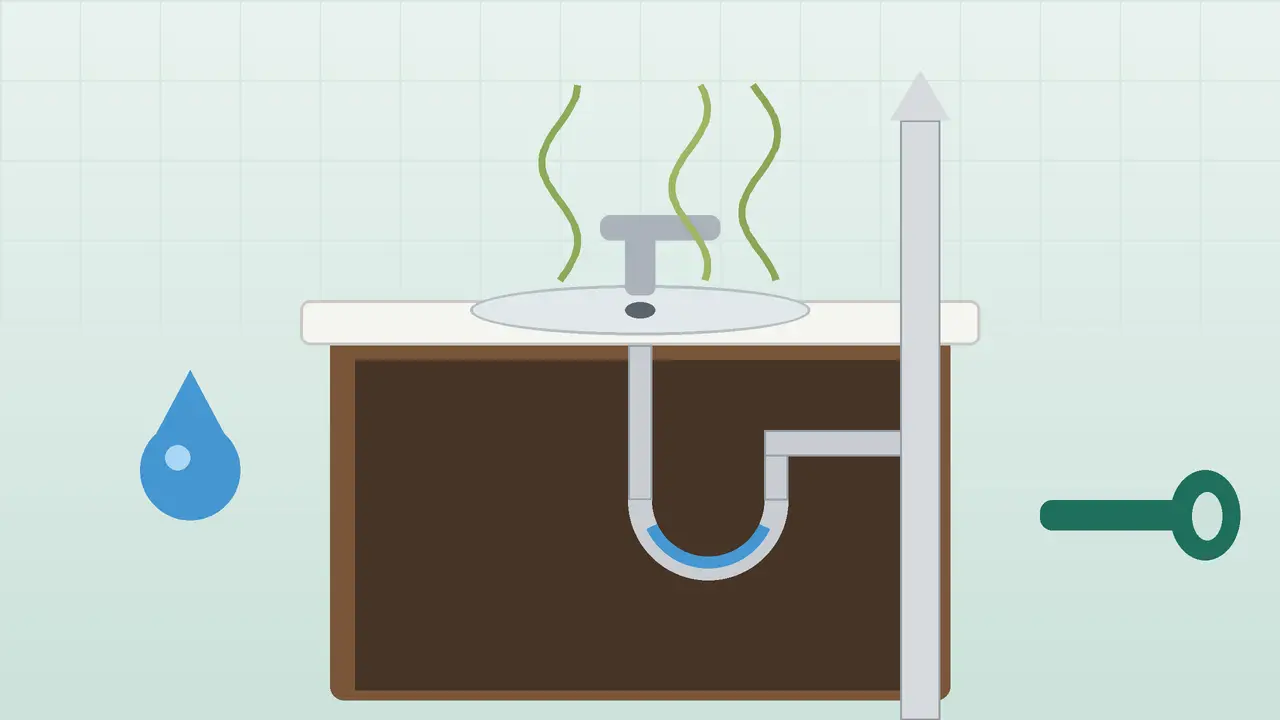
A sewer smell from a sink is unpleasant, but the cause is usually simple. Every drain in your house is supposed to have a water seal (the trap) and a vent that keeps that seal in place. When one of them stops doing its job, gases from the sewer or septic system can drift back up through the drain. The North Dakota Department of Environmental Quality says sewer gas in a home is usually caused by plumbing leaks or a dry trap in a rarely used drain.
This guide walks through the likely causes in order, from the five-minute fixes to the ones that need a plumber. It draws on homeowner guidance from city and state agencies, including the City of Kerrville, Texas sewer odor handout, the City of Minneapolis, and the Illinois and Minnesota health departments.
First: make sure it isn't a gas leak
Sewer gas and natural gas can smell alike. The Public Service Commission of Wisconsin says natural gas has an odorant added that people describe as rotten eggs, sulfur, or garlic.
Treat the smell as a possible gas leak if:
- It is strongest near a gas range, water heater, furnace, dryer, or gas meter rather than at the drain
- You hear hissing near a gas appliance or line
If so, leave the area immediately and call your gas utility's emergency number or 911 from outside. The Wisconsin PSC warns not to use cell phones, lights, appliances, cars, flames, or anything that could spark near a suspected leak. Don't go back in until the utility says it's safe.
If the smell is clearly coming from the sink drain, keep reading.
How a sink keeps sewer gas out
Look under the sink and you'll see a curved section of pipe, usually shaped like a U or a sideways J. That's the P-trap. Minneapolis describes it as a U-shaped pipe that holds water and prevents gas from backing up from the sewer. The water sitting in the bend is the seal.
The other half of the system is the vent, a pipe that connects to the drain line and runs up through the roof. The Kerrville handout explains that pressure in sewer lines rises and falls as water flows, and without a vent, gases can bubble through the trap or the trap can be siphoned dry. The vent lets that pressure escape.
So a sewer smell almost always means one of these: the seal is gone, something smelly is living inside the sink's own drain parts, the drain pipe has a leak, or the vent isn't working.
Cause 1: The trap has dried out
This is the most common cause in a sink you rarely use, such as a guest bathroom, a basement bar sink, or a vacation home. Water in the trap slowly evaporates, and once the seal is gone, the drain is an open path for sewer gas.
Fix: Run water for about a minute, or pour in about a quart. Kerrville's guidance says pouring a quart of water into sinks, showers, tubs, and floor drains may correct the problem. Then check back in a few hours.
To keep it from happening again:
- Run water in seldom-used sinks regularly. Minneapolis recommends periodically running water in all bathroom and utility room sinks so the trap doesn't dry out.
- For drains that are hard to keep up with, Kerrville suggests adding about 1/4 cup of mineral oil after refilling the trap, which slows evaporation.
If the smell returns quickly in a sink that gets daily use, the trap isn't simply drying out. Move on.
Cause 2: Gunk in the overflow or drain
Many bathroom sinks have an overflow, the small hole near the rim that routes water into the drain if the basin overfills. The Kerrville handout notes that debris can collect inside that hidden channel and cause odor. The stopper linkage and the walls of the drain itself also collect hair, soap scum, toothpaste, and biofilm, which can smell surprisingly like sewage.
A quick test: sniff right at the overflow hole and right at the drain opening. If one is much stronger, that's your spot.
Fix:
- Pull out the pop-up stopper. On many bathroom sinks it lifts straight out or comes free after you loosen the pivot nut on the back of the drain pipe under the sink. Clean off the hair and slime.
- Scrub inside the drain opening with a narrow drain brush.
- Clean the overflow channel. Kerrville suggests flushing a cleaner down the overflow. The North Dakota DEQ suggests pouring a cup of baking soda followed by a cup of vinegar down the drain, letting it sit a few minutes, then flushing with hot water.
- Run water to refill the trap when you're done.
Never mix cleaners. Don't combine bleach with vinegar, ammonia, or commercial drain openers; mixing products can release harmful gases. Use one product at a time, follow the label, and rinse well between them.
In a kitchen sink, rotting food in a garbage disposal or a partly clogged trap can smell, too. Turn the disposal's power off before putting hands or tools near it. Our guides to unclogging a kitchen sink and fixing a jammed garbage disposal cover the steps.
Cause 3: The trap or drain line is leaking
A loose slip nut or cracked trap can let water drain out of the seal and let gas escape at the joint. Look under the sink with a flashlight for:
- Damp spots, drips, or water stains on the cabinet floor
- White crust or corrosion at the slip nuts
- A trap that's missing altogether, or one that's been replaced with a flexible accordion pipe that sags
Hand-tighten slip nuts and replace worn washers. If the trap is cracked or the joints keep leaking, replace it; see how to fix a leaking P-trap under the sink. The Kerrville handout points out that codes require a trap at every drain, so a sink with no trap needs one installed.
Beyond the sink, Kerrville and the North Dakota DEQ both point to cracked or corroded drain pipes. Kerrville notes that the top side of older metal horizontal drain pipes can rust through and leak gas without ever leaking water, so a smell with no visible drip can still be a pipe problem.
Cause 4: A blocked or missing vent
If the trap holds water but keeps losing its seal, or you hear gurgling when the sink or a nearby toilet drains, suspect the vent. Kerrville lists clogged vents, often from bird nests, leaves, or pests, as a cause of indoor odors, and notes that vents may need to be cleared all the way through the roof. The Missouri Department of Health and Senior Services' septic owner's manual adds that freezing can temporarily clog a vent in winter.
Other signs of a vent problem:
- Slow drainage even though nothing is clogged in the trap
- Water level in a nearby toilet bowl that bounces or drops when the sink drains
- The smell appearing right after a big drain, like a tub emptying
Fix: This is usually a job for a plumber. Clearing a roof vent means working on the roof, and diagnosing a missing or undersized vent takes plumbing knowledge.
Cause 5: The smell is in the water, not the drain
Fill a glass at the faucet and step away from the sink. If the water itself smells like rotten eggs, the drain isn't the problem. The Minnesota Department of Health suggests smelling both the hot and cold water after you've been away for a few hours to find the source:
- Hot water only: The water heater is likely producing hydrogen sulfide. MDH explains that its magnesium anode rod and sulfur bacteria can convert sulfate in the water into the gas. MDH lists options such as replacing the anode with a different material and disinfecting the heater, and recommends having a plumber or water system professional do the work unless you're very familiar with water heaters.
- Hot and cold, on a private well: The well or groundwater may be the source; MDH also recommends testing well water for coliform bacteria and nitrate in that case.
- City water: Call your water utility.
Is sewer gas dangerous?
Sewer gas contains hydrogen sulfide. The Illinois Department of Public Health says you can smell it at lower levels than may cause health effects, so smelling it doesn't always mean it will make you sick. It also notes that very high levels, which can be dangerous, would not be expected in a home. Still, lower levels can cause eye irritation, sore throat, and cough, and long-term exposure may cause headaches and fatigue.
While you track down the source, open windows and run exhaust fans, as the North Dakota DEQ suggests. If anyone feels sick, get them into fresh air and contact a doctor.
Quick diagnosis checklist
| What you notice | Most likely cause | First step |
|---|---|---|
| Rarely used sink, smell comes and goes | Dry trap | Run water; consider mineral oil |
| Smell strongest at the overflow hole or drain | Gunk and biofilm | Clean stopper, drain, and overflow |
| Damp cabinet, crusty joints | Leaking trap or fitting | Tighten or replace trap |
| Gurgling, slow drain, trap keeps emptying | Vent problem | Call a plumber |
| Water from the tap smells, especially hot | Water heater or water supply | See MDH guidance; call a pro |
| Smell near gas appliances, hissing | Possible gas leak | Leave and call the utility or 911 |
When to call a plumber
Call a licensed plumber if:
- The smell keeps coming back after you've refilled and cleaned the trap
- You hear gurgling or see other signs of a vent problem
- There's no trap, the trap is badly corroded, or you find cracks in drain pipes
- The smell is throughout the house or in several drains at once
- Your water heater seems to be the source and you aren't comfortable working on it
The North Dakota DEQ advises calling a plumber if the odor is strong and widespread, if you see damaged plumbing, or if it keeps coming back after cleaning.
Related guides
- How to Fix a Leaking P-Trap Under the Sink
- How to Unclog a Kitchen Sink: Plunger, P-Trap and Snake Methods
- Garbage Disposal Humming But Not Working? How to Unjam It
Sources and further reading
- North Dakota Department of Environmental Quality: Sewer Gas
- City of Kerrville, Texas: Why Do I Have Sewer Odor in My Home? (PDF)
- City of Minneapolis: Sewer Safety and Maintenance Tips
- Illinois Department of Public Health: Hydrogen Sulfide Gas
- Minnesota Department of Health: Hydrogen Sulfide and Sulfur Bacteria in Well Water
- Missouri Department of Health and Senior Services: Troubleshooting Onsite Wastewater System Problems
- Public Service Commission of Wisconsin: Natural Gas Consumer Safety
Sources checked 2026-11-10. Plumbing layouts and local codes vary. When in doubt, call a licensed plumber, and if something here doesn't match your home, let us know.
Frequently asked questions
Why does my sink smell like sewage only sometimes?
An on-and-off smell often points to the trap. If a sink is rarely used, the water seal in its P-trap can evaporate, and the smell returns until someone runs water again. A smell that shows up mainly when other fixtures drain, often with gurgling, can point to a venting problem that pulls water out of the trap. City and county guidance, such as the Kerrville, Texas sewer odor handout, lists both causes.
Is it dangerous to breathe sewer gas from a sink?
Sewer gas contains hydrogen sulfide, which smells like rotten eggs. The Illinois Department of Public Health says you can smell it at levels lower than those that cause health effects, so smelling it does not always mean it will make you sick, and very high levels are not expected in a home. Lower levels can still irritate the eyes, nose and throat, so air out the room and find the source rather than living with it.
How do I know if the rotten-egg smell is gas and not sewer gas?
Natural gas has an odorant added that people describe as rotten eggs, sulfur or garlic, according to the Public Service Commission of Wisconsin. If the smell is near a gas stove, water heater, furnace or meter, or you hear hissing, treat it as a gas leak: leave right away and call your gas utility's emergency number or 911 from outside. Do not use switches, phones or flames near the leak.
Will pouring water down the drain fix the smell?
If the trap had dried out, yes. Kerrville's sewer odor guidance says pouring about a quart of water into sinks, tubs and floor drains may correct the problem because it refills the trap's water seal. If the smell comes back within a day or two in a sink you use regularly, the trap is probably being siphoned or leaking, or the source is somewhere else.
Why does only my hot water smell like rotten eggs?
If the smell comes from the water itself, and only from the hot tap, the Minnesota Department of Health says the water heater can be the source: its magnesium anode rod and sulfur bacteria can convert sulfate in the water into hydrogen sulfide. That is a water heater issue, not a drain issue. MDH recommends having a plumber or water system professional do water heater work unless you are very familiar with it.