How to Prevent Frozen Pipes in Your House (Before and During a Freeze)
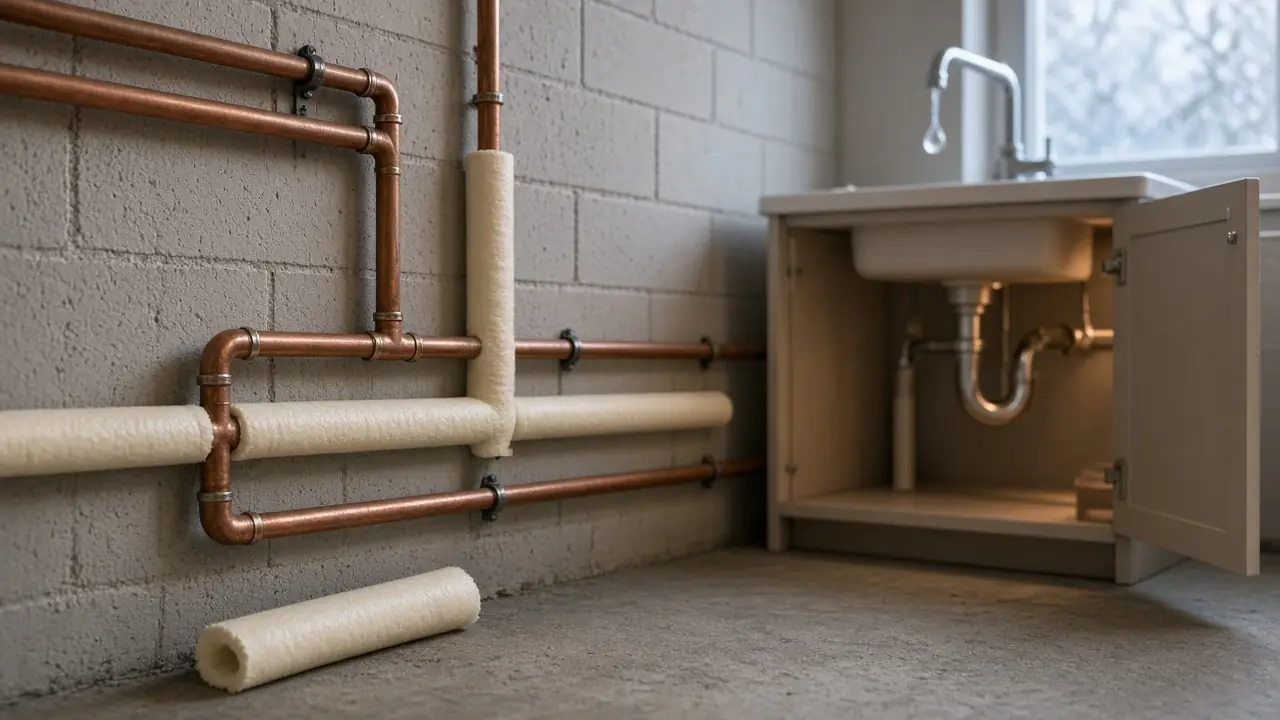
Water expands as it freezes. The American Red Cross explains that this expansion puts tremendous pressure on whatever contains it, including metal and plastic pipes, and that expanding water can break a pipe no matter how strong the material looks. A split supply line can flood a basement or kitchen quickly, which is why prevention matters more than a last-minute thaw.
This guide follows public guidance from the American Red Cross, Ready.gov winter weather advice, and Michigan's emergency-management page on preventing frozen pipes. Local plumbing codes and your water utility's rules still come first. These steps are for typical homes and rentals; they are not a substitute for a licensed plumber when a line is already frozen in a wall, a valve will not close, or water is spreading.
Which pipes freeze first
The Red Cross says the pipes that freeze most often are:
- Outdoor hose bibs, swimming-pool supply lines, and water-sprinkler lines
- Water supply pipes in unheated interior areas such as basements, crawl spaces, attics, garages, or under kitchen cabinets
- Pipes that run against exterior walls with little or no insulation
Both hot and cold lines in those spots deserve attention. A "hot" pipe still holds water that can sit and freeze if the surrounding space gets cold enough.
Before cold weather: protect the lines
Do this work on a mild day, not during the first hard freeze.
Disconnect hoses and drain outdoor faucets
The Red Cross recommends removing, draining, and storing hoses used outdoors. Then:
- Close the inside valves that supply outdoor hose bibs, if your home has them.
- Open the outside hose bibs so water can drain.
- Leave the outside valve open so any water left in that short stretch of pipe can expand without breaking the pipe.
That short indoor stretch just behind an outdoor faucet is a common failure point. For a step-by-step walkthrough of indoor shutoff valves and vacuum breakers, see How to Winterize Outdoor Faucets and Hose Bibs.
Drain pool and sprinkler supply lines the right way
Follow the manufacturer's or installer's directions to drain swimming-pool and water-sprinkler supply lines. The Red Cross is explicit: do not put antifreeze in these lines unless directed. Antifreeze is environmentally harmful and can be dangerous to people, pets, wildlife, and landscaping.
Insulate unheated spaces and exposed pipes
- Add insulation in attics, basements, and crawl spaces so those rooms stay warmer.
- Look for supply lines in the garage and under kitchen or bathroom cabinets. The Red Cross says both hot and cold pipes in those areas should be insulated.
- Use products made for the job, such as a foam pipe sleeve, or install UL-listed heat tape, heat cable, or similar materials on exposed water pipes. Follow the listing and the manufacturer's instructions; Michigan's guidance says to use only products approved by an independent testing organization such as Underwriters Laboratories, and only for the intended interior or exterior use.
- In a pinch, the Red Cross notes that newspaper can provide some insulation: even about 1/4 inch can help in places that do not usually see frequent or prolonged temperatures below freezing. Treat that as a temporary extra layer, not a replacement for proper pipe insulation in a cold climate.
- Consider relocating exposed pipes if they sit in a chronically freezing spot. That is a plumber's job.
Michigan also recommends sealing air leaks that let cold air reach pipes, especially around electrical wiring, dryer vents, and pipe penetrations. A small gap can be enough to freeze a line when wind chill is severe. Caulk or insulation that keeps cold air out helps the plumbing and the heating bill. Weatherstripping on exterior doors is part of the same idea; see How to Install Weatherstripping on an Exterior Door.
Ready.gov likewise tells households to prepare the home against cold with insulation, caulking, and weather stripping, and to learn how to keep pipes from freezing.
During a freeze: keep warm air on the pipes
These habits matter on the coldest nights:
- Close the garage door if there are water supply lines in the garage.
- Open kitchen and bathroom cabinet doors so warmer room air can reach the plumbing. Move harmful cleaners and household chemicals up and out of the reach of children, as the Red Cross notes.
- Let cold water drip from the faucet served by exposed pipes when the weather is very cold. A trickle helps keep water moving so ice is less likely to form.
- Keep the thermostat at the same temperature day and night. The Red Cross says skipping the usual overnight setback may raise the heating bill, but it can prevent a much more costly frozen-pipe repair.
- If you will be away, leave the heat on and set it no lower than 55°F. Michigan adds that you can ask a friend or neighbor to check the house daily to make sure it is still warm enough.
If you shut the water off and drain the system before a long winter trip, Michigan warns that a fire-protection sprinkler system in the house will be deactivated when the water is off. Know what you have before you drain anything.
Know the main shutoff before you need it
Prevention is the goal, but you still need a way to stop water if a line splits. Find and tag the house main shutoff now, and make sure everyone at home knows how to close it. Ready.gov and many utilities treat that as basic household safety. Our walkthrough is here: How to Shut Off Water to Your House.
Michigan says that if you detect frozen pipes, you should turn the water off at the main shut-off valve in the house. Do not wait until a thaw turns a hairline crack into a flood.
If you think a pipe is already frozen
The Red Cross says to suspect a frozen pipe when a faucet gives only a trickle. Likely places include pipes against exterior walls and the point where the service line enters through the foundation.
Safe thawing, based on Red Cross and Michigan guidance:
- Keep the faucet open. As ice melts, water needs somewhere to go. Flowing water also helps melt remaining ice.
- Apply heat only with a safe method: an electric heating pad wrapped around the pipe, an electric hair dryer, a portable space heater kept away from flammable materials, or towels soaked in hot water. Michigan suggests starting near the faucet and working toward the coldest section of pipe.
- Continue until full water pressure returns.
- Check other faucets. If one pipe froze, others may have frozen too.
Do not use a blowtorch, kerosene or propane heater, charcoal stove, or other open flame. That is a fire and carbon monoxide hazard, and it can damage the pipe.
Call a licensed plumber if you cannot find the frozen section, cannot reach it, or cannot thaw it. Michigan is blunt: if you turn on faucets and nothing comes out, call a plumber rather than guessing inside a wall.
If water is already leaking or pooling:
- Shut the main valve if you can do so safely.
- Stay out of standing water with electrical appliances and extension cords. Michigan notes that electrocution is possible.
- Photograph damage for insurance or a landlord when it is safe.
- Call a plumber for the repair.
When to call a plumber (or your utility)
Call a licensed plumber if:
- You cannot locate, reach, or thaw a frozen pipe
- A faucet produces no water at all
- A pipe has burst, or you see active leaking after a freeze
- The main shutoff is stuck, will not seal, or you are not sure which valve to use
- You want exposed lines relocated or heat cable installed to listing and code
Call your water utility if there is no indoor shutoff you can operate, or if the break appears to be at the meter or in the street.
Renters should also tell the landlord or property manager as soon as a line is frozen or leaking. Do not wait overnight in extreme cold.
Safety notes
- Open-flame thawing is never a reasonable shortcut.
- Keep space heaters away from curtains, paper, and stored items, and never leave an unsafe heater unattended.
- Install and test smoke alarms and carbon monoxide detectors with battery backups, which Ready.gov lists as part of winter preparation.
- If heating bills or weatherization repairs are a hardship, Ready.gov points households to the Low Income Home Energy Assistance Program (LIHEAP).
- After any disaster that may have cracked pipes, Ready.gov's broader winter and safety-skills guidance is to treat contaminated supply lines seriously and follow local authorities on whether water is safe.
A practical cold-weather checklist
- Garden hoses removed, drained, and stored
- Indoor hose-bib valves closed; outdoor spigots opened to drain and left open
- Pool and sprinkler lines drained per the manufacturer, with no antifreeze unless directed
- Exposed pipes in the basement, crawl space, attic, garage, and under-sink cabinets insulated
- UL-listed heat tape or cable installed only where the product allows, following the instructions
- Drafts sealed near pipes, dryer vents, and wiring penetrations
- Garage door kept closed if plumbing runs through the garage
- Cabinet doors opened on the coldest nights, with chemicals moved out of children's reach
- Vulnerable faucets set to a cold-water drip during extreme cold
- Thermostat held steady, and no lower than 55°F if the house will be empty
- Main water shutoff located, tagged, and tested on a calm day
- Plumber's and water utility's numbers saved in your phone
Related guides
- How to Winterize Outdoor Faucets and Hose Bibs
- How to Shut Off Water to Your House (Find and Use the Main Valve)
- How to Install Weatherstripping on an Exterior Door (Step by Step)
Sources and further reading
- American Red Cross: Preventing and Thawing Frozen Pipes
- Ready.gov: Winter Weather
- Michigan Emergency Management: Preventing Frozen Pipes
Sources checked 2026-11-08. Climate, construction, and utility rules vary. If your home's piping is different, follow a licensed plumber and your water provider, and let us know.
Frequently asked questions
What temperature should I set the thermostat to so pipes do not freeze?
The American Red Cross says to keep the thermostat at the same temperature during the day and at night, rather than setting it much lower overnight. If you will be away in cold weather, leave the heat on and set it to a temperature no lower than 55°F. Michigan's emergency-management guidance uses the same 55°F floor when you are away.
Does letting a faucet drip really help?
Yes, when the weather is very cold. The Red Cross says to let cold water drip from the faucet served by exposed pipes. Moving water, even at a trickle, is less likely to freeze than standing water in the line.
How do I know a pipe is frozen?
The Red Cross says that if you turn on a faucet and only a trickle comes out, you should suspect a frozen pipe. Common locations are pipes against exterior walls and the spot where the water service enters through the foundation. Check other faucets too, because more than one pipe can freeze.
What should I never use to thaw a frozen pipe?
Do not use a blowtorch, kerosene or propane heater, charcoal stove, or any other open flame. The Red Cross lists those as unsafe. Michigan's guidance also says never try to thaw a pipe with a torch or open flame, and not to use electrical appliances in standing water because of the shock risk.
What should I do if a pipe bursts?
Shut off water at the house main valve if you can operate it safely, then call a licensed plumber. Keep electrical devices out of standing water. If you cannot find or close the indoor shutoff, contact your water utility about shutting service at the meter or street.